

In poker, you don’t want to let your opponents know what you have.
But in some spots, the majority of players play so straightforwardly that they virtually tell you what they have.
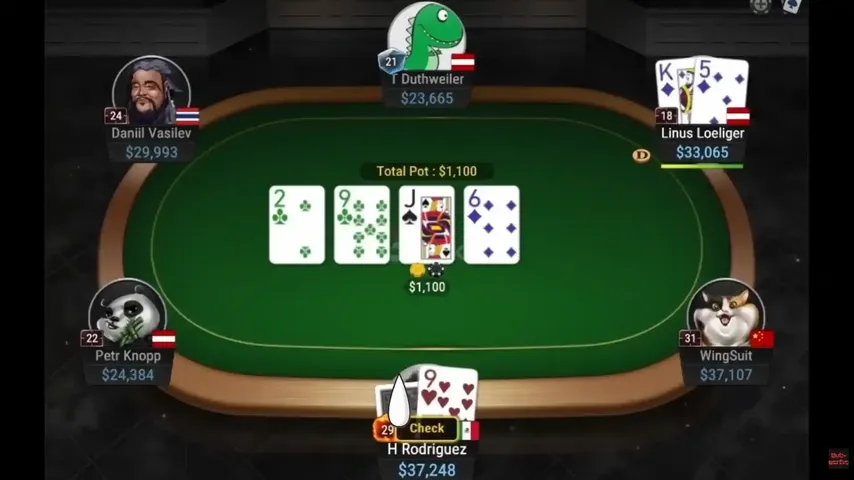
Hector Rodriguez vs LLinusLLove at $100/$200
This hand is played at high stakes, so these exact players are much more balanced than the average. But it’s a great example of a spot where you can expect your opponents to play very honestly on average. If you play mid-stakes or below, even more so.
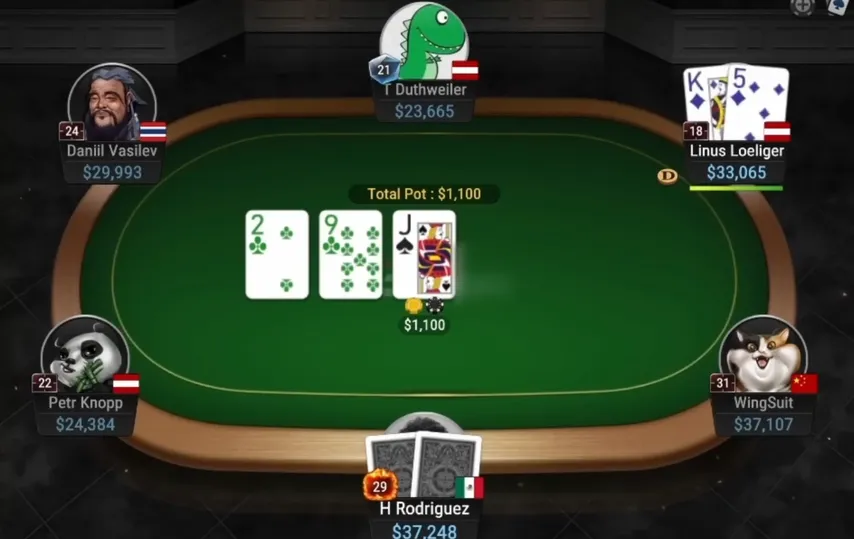
Linus opens on the button to $500 and gets called by Hector Rodriguez in the big blind.
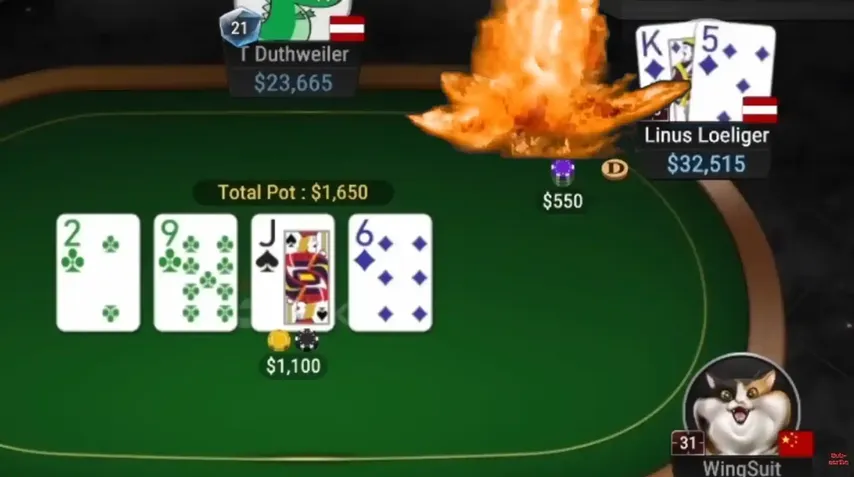
Instead of c-betting, Linus checks behind on the flop, which in itself doesn’t tell us a lot about his strategy.
He could be using a big c-bet size like 100%, which GTO Wizard suggests is the single best one. Then his checking range would be very wide, and would be a high-frequency check.
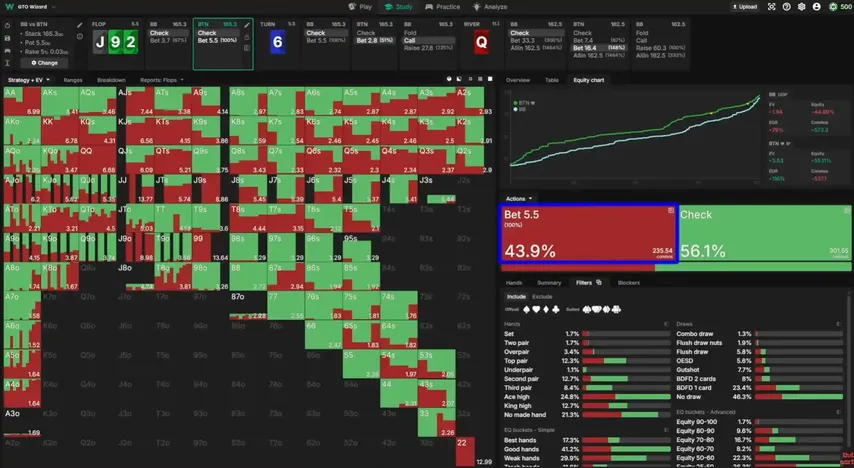
But he could also be using a 33% pot bet, which would mean he checks much fewer hands overall. Then would bet more often, but still check around half the time.
Any bet size in between is, of course, possible as well, but for this example, we’ll work with GTO Wizard’s suggested 100% pot bet simulation.
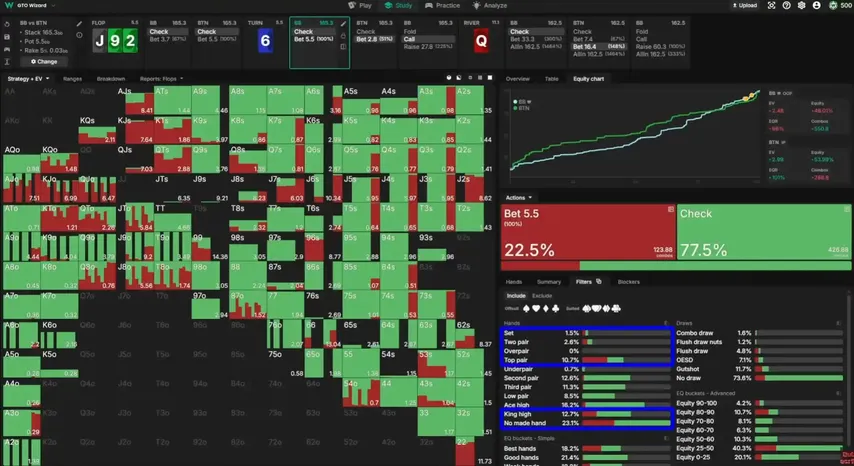
Here, overpairs and better would practically bet all the time. Underpairs, second pair, and third pair would almost never bet. All other hand classes, like top pair, ace-high, and worse, would mix bets and checks.
On the turn, we see the big blind check.
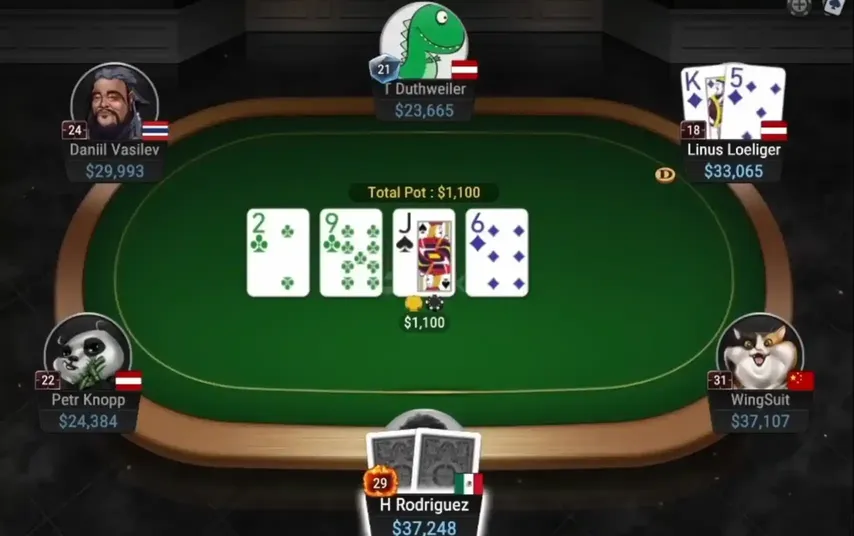
Now, in poker in general, you want to look for spots where your opponent makes mistakes. And most mistakes happen in spots that are not easy for a human to play, which are often spots that go against human intuition.
This is such a spot.
To understand why, let’s look at what would be the big blind’s GTO strategy. According to GTO Wizard, the big blind’s highest EV bet size would also be a big and polarizing bet of 100% pot, which would include almost exclusively top pair and better, and king-high and worse.
This is where human intuition comes in.
What is happening here from the big blind’s point of view?
They just saw the button check behind on the flop. The board is quite dynamic, and now there are two streets of betting left. So what’s the most intuitive thing to do with your good and great hands?
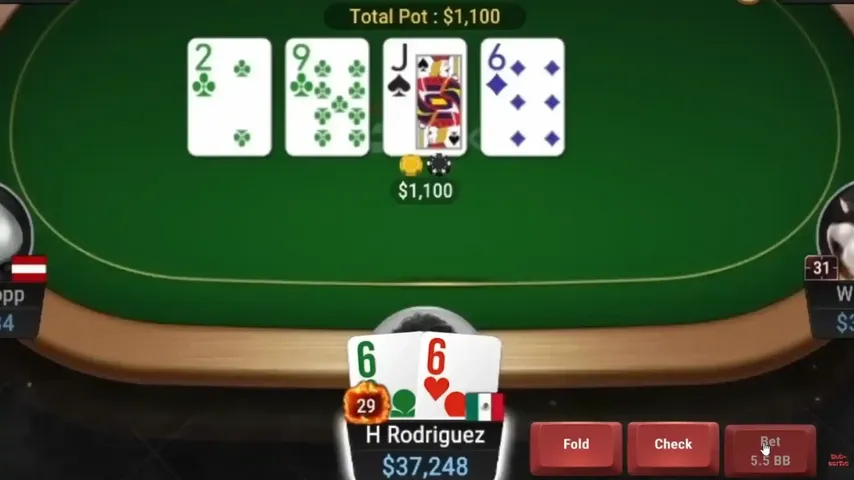
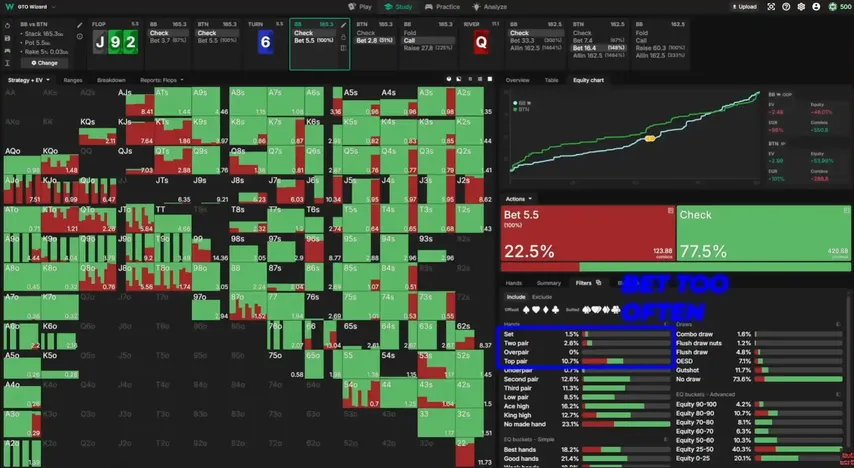
Well, in GTO, almost 40% of top pairs, especially weaker ones without a flush draw, would check, and even close to half of all nut-like hands, such as two pair and sets, would check here. In theory, these hands do want to bet and get value.
But it’s also important to check some strong hands, because otherwise the big blind would end up with a checking range that is far too weak and consists mostly of second pair and worse. Also, by check-raising, you have a great chance to put much more money into the pot with your strongest hands if the button bets.
But that’s not the most intuitive action.
On average, this is a spot where players play too honestly and just follow their first instinct. They check their medium-strength and air hands, which is actually very GTO, but they also bet their good and great hands too often, which makes their checking range too weak.
And what’s the result of that? They clearly overfold against a bet on the turn.
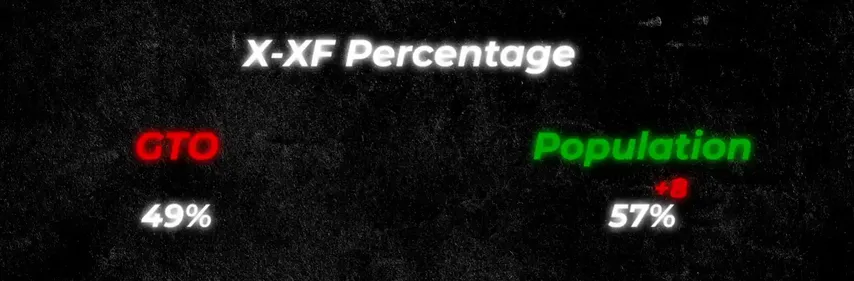
Across all boards, the population check-folds around eight percentage points more often against a bet in this node than GTO would allow. Intuition leads to mistakes.
Now, I’m not saying that checks are always weak or that nobody can balance their checking ranges. But when in doubt, people fall back on their most basic principles. And when the spot is harder to get right, either because it doesn’t occur often and requires careful thought, or because ranges are very wide, or both, the basic principle tends to become: good hand, put money in; bad hand, don’t.
And what does knowing about their overfolding mean for us as the in-position player?
Right. Fire at will.
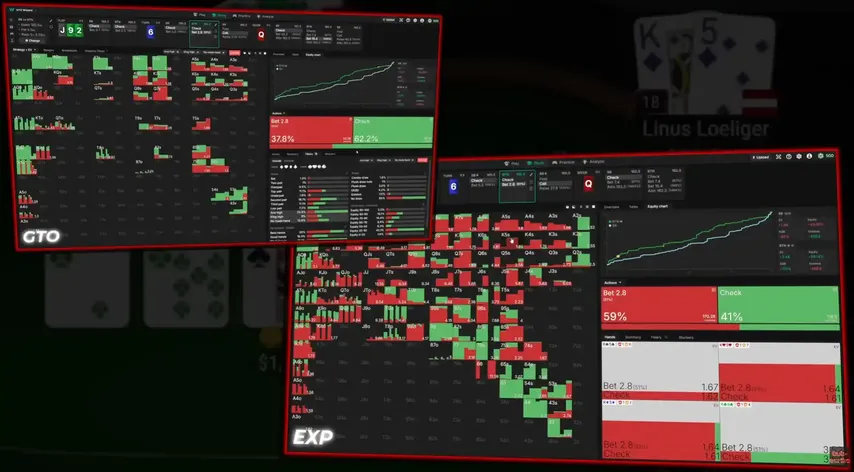
While this bet exists in GTO as well, we can use it much more often when we expect the big blind to fold too frequently, with an expected overfold of eight percentage points on average. Instead of betting bluffs like ace-high and worse 38% of the time, we could bet them 65% of the time, and would be a great candidate to bet.
Now, when we see another passive action with a check-call, the average player at mid-stakes and below really tells us what they have.
They had two chances to be aggressive, knowing there is only one more street left, but they chose to just check-call. On average, that means they have exactly what it looks like they have: some medium-strength pair or worse much more often than they should in GTO.
Read ReadAgain, that results in a consistent overfold from the population in this node. Across all boards it’s around two percentage points, but on boards similar to this one, such as jack-high flops with an overcard on the river, it’s even higher.
Even just increasing the folding frequency by two percentage points compared to GTO in the solver makes our hand, , as well as all other king-high and worse hands, and almost 70% of ace-high hands, profitable bluffs, which would not be the case in GTO.
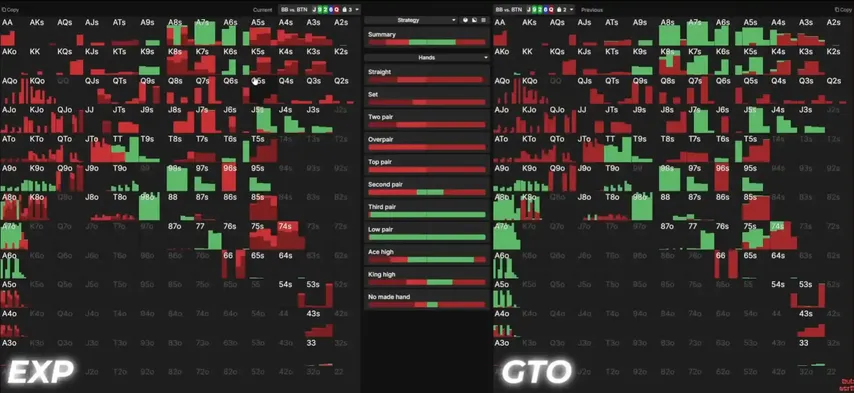
As always, that doesn’t mean they never call here. But as long as they don’t call with hands we didn’t expect them to call, there’s no reason not to keep going for this exploit.
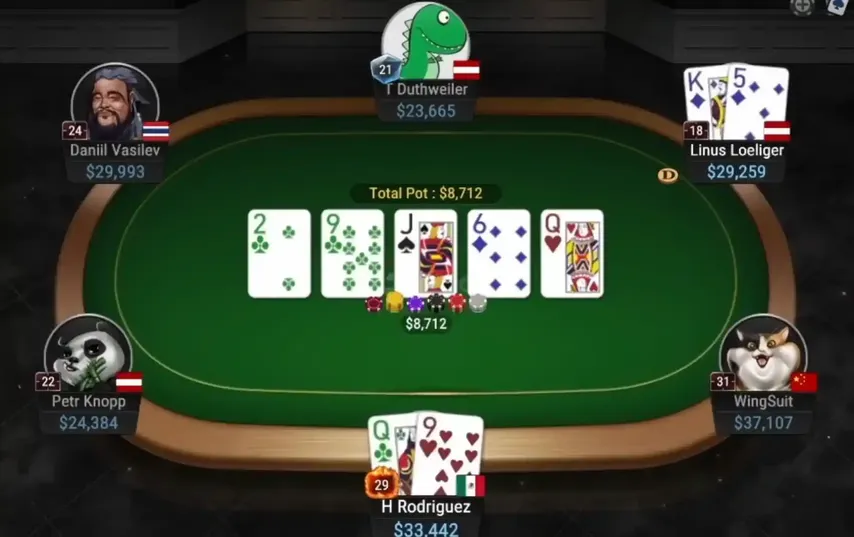
Linus bets $3,256 into $2,200.
So, as we learned, exploits are the biggest money printer in poker. But to truly apply them most effectively, you first need to learn one more thing.