

In early October, Rinat Lyapin won the Amber Poker Championship High Roller.
Unlike previous stages, the tournament broadcast was cut off mid-game: Rinat discovered defects in his spades and clubs during play, and the introduction of a new deck didn't improve the situation.
Fully streamed tables appeared on Amber relatively recently. From my first few final tables, I noticed that some of the cards were slightly concave. I complained a couple of times—the cards were different, but it seemed like nothing had changed.
At one of the high-stakes finals, I discovered two scratched cards from different decks. The cards were peeling at the corners. Both turned out to be . The situation was hushed up, and I haven't noticed any such scratches since.
Today at the XP finals, I noticed bent cards again. I called them "boats," with the backs curved upward, like the wings of an airplane. I was kidding myself and decided to memorize the boat-shaped cards I was dealt. I'd done this before at these finals, but I didn't see the logic—usually, dealers bend the higher cards, but this one seemed random. I remembered the king, then the ten. Maybe the higher ones?
Then I got the . I was about to raise, but I noticed the corner chip just in time and folded just in case. Another coincidence? They called the floor, and the deck was swapped for a completely fresh one with a different back color.
The cards are fresh, but the problems are the same. Literally on the second hand, I was dealt a "boat". The . Hmm. I notice another boat card at the table with my opponent. A few hands later, another boat card in his hand – an . Then a deuce again. Then there's an all-in at the table, and even before the deal, I noticed a "boat" on the player involved. He showed two jacks: clubs and spades. When they turned it over, I noticed that the club was bent the other way – like a boat, but upside down. I called it humpback. I recall the suits of the boats from the previous deck: I think they were also spades (king and ten). I say I suspect a certain pattern. I point out which of my opponents has boats.
The dealer lays down the flop: two reds, nine of clubs. The nine is clearly and unnaturally "hunched." I say this out loud. One of the opponents says he's also noticed a pattern. After playing a few more hands and testing the theory together, we decide to call the floor. We explain the situation. We conduct an experiment. A deck is laid out face down in front of us. I randomly select five boats and set them aside. "Now there's a trick coming." I turn it over—all spades! Max blindly selects a few hunchback cards—all clubs!
The floor is taking a technical break. They're checking old decks, printing new ones. The same thing everywhere. The situation is hopeless. They're blaming it on a manufacturing defect. There are no other "non-defective" cards. They've decided to continue with the standard Fournier deck, without broadcasting.
Comments quickly revealed that similar defects had been observed in other gambling zones.
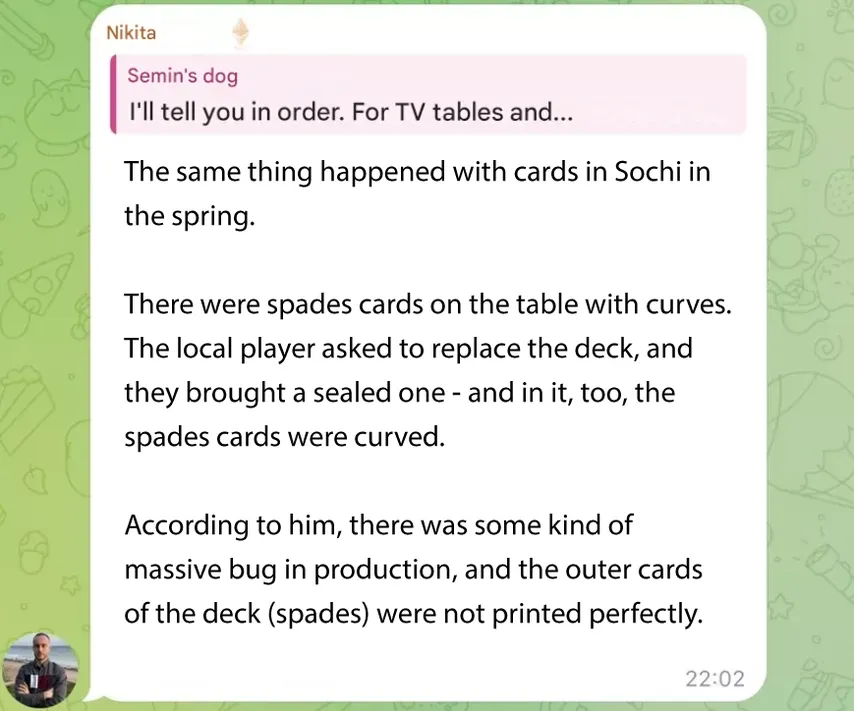 omment from a subscriber
What Cards Are We Talking About?
TV tables use special cards: they look like regular plastic ones, but they contain RFID chips. Each chip has a unique code that identifies the card's denomination and suit.
Players on TV tables are asked to place their hole cards in a specific location inside their box—an RFID reader is located there, which detects the code and transmits it encrypted to the broadcast system. Sometimes players place their cards incorrectly, resulting in the player's hand not being shown on air.
In the 2000s, cameras embedded in tables were used for surveillance. Between 2013 and 2015, organizers switched en masse to RFID, which became the industry standard.
There are quite a few manufacturers of such decks:
- Faded Spade (USA) supplies WPT cards
- Cartamundi (Belgium, USA) owns the brands Copag (used at the WSOP), Fournier, USPCC
- Angel (Japan), Modiano (Italy) and others.
There are also no-name manufacturers whose products can be purchased on Aliexpress and similar platforms. One can only guess at the quality standards they adhere to.
The broadcast of the tournament in Kaliningrad was cancelled precisely because the RFID deck could not be used. The organizers switched to chipless Fournier plastic cards, which make it impossible to display graphics quickly.
Alexey Lee, manager of the Sobraine poker club in Kaliningrad and the Amber Poker Championship:
We first began broadcasting on TV this summer. Just a few episodes in, our regular guest, Rinat Lyapin, noticed a defect in the cards. In some cases, the defect was immediately visible, while in others, it was barely noticeable. That same day, all the decks were removed for further inspection.
The inspection confirmed the presence of defects of varying severity, which become more pronounced as the cards are used. We believe the exact causes of the deformations can only be determined by understanding the entire manufacturing process.
Ultimately, the obvious decision was made: to terminate our partnership with this supplier. We are currently seeking a new manufacturer with a proven track record for responsible and safe gaming. Therefore, the Amber Poker Championship TV broadcasts are currently being conducted with hole cards.
Please note that we are talking about chipped cards that are used only on TV tables.
Where Defective Decks Were Noticed
Rinat discovered the problem with RFID cards at poker tournaments around the world. We checked: bended cards do occasionally appear on broadcasts, although it's not always clear whether the issue is due to a specific deck or just normal wear and tear.
July SPF High Roller :
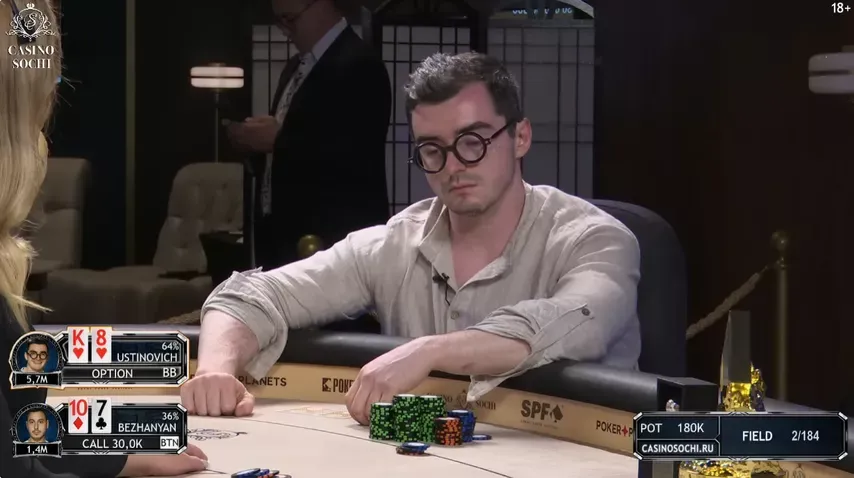 If you wish, you can see the characteristic "boat-like" bend of Oleg Ustinovich's cards ( time code )
WSOP Bahamas 2024 :
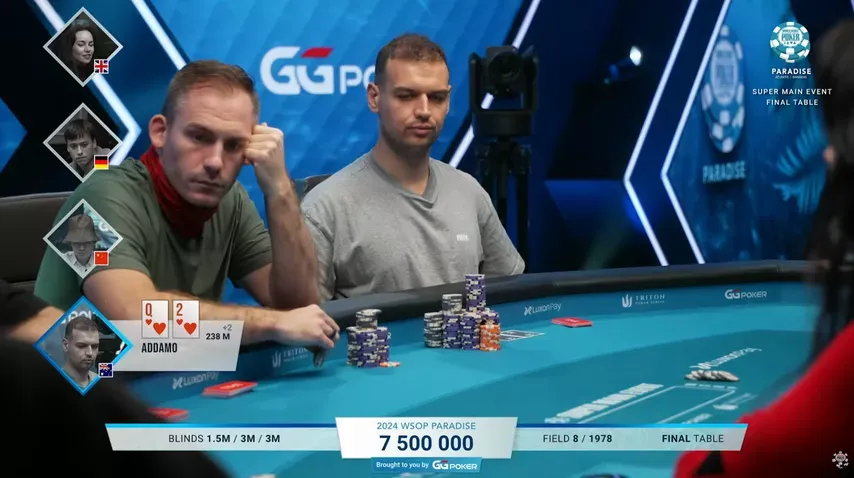 Mile Addamo has two heart cards – both curved edges up ( timecode )
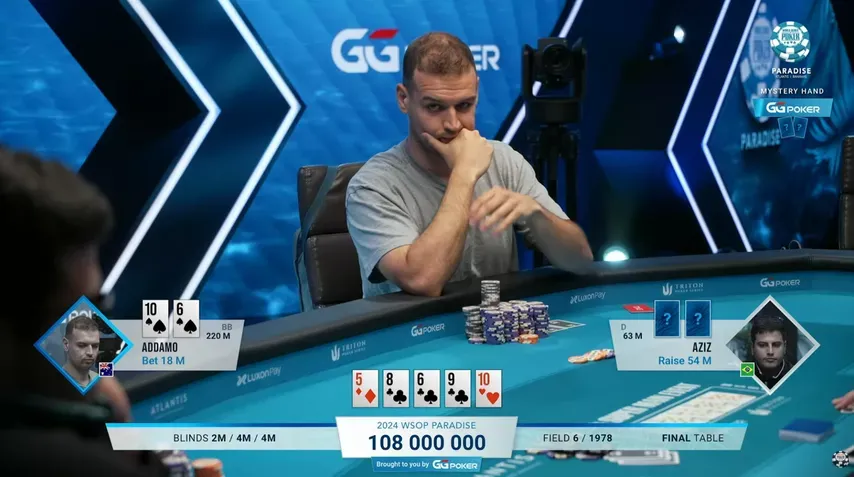 Two spades are also boat-shaped cards ( timecode )
EPT Barcelona 2022:
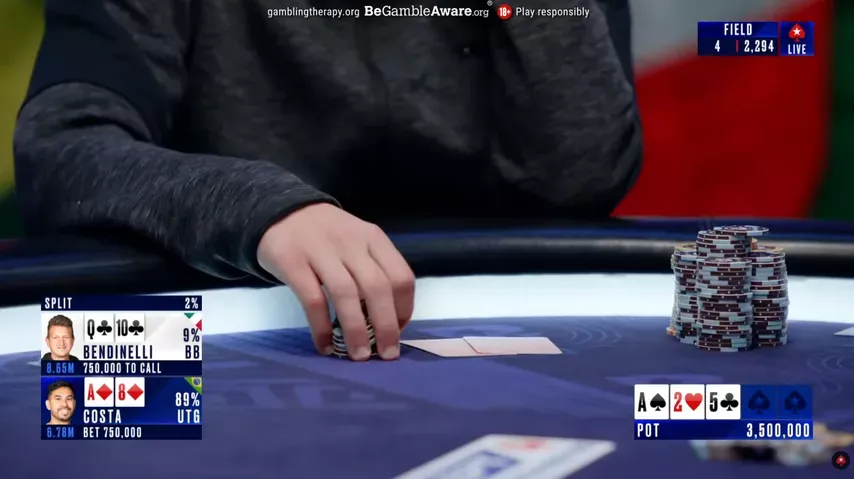 Future champion Giuliano Bendinelli has two clubs, with the left one showing a noticeable protrusion in the middle ( time code )
EuroPokerMillion 2025:
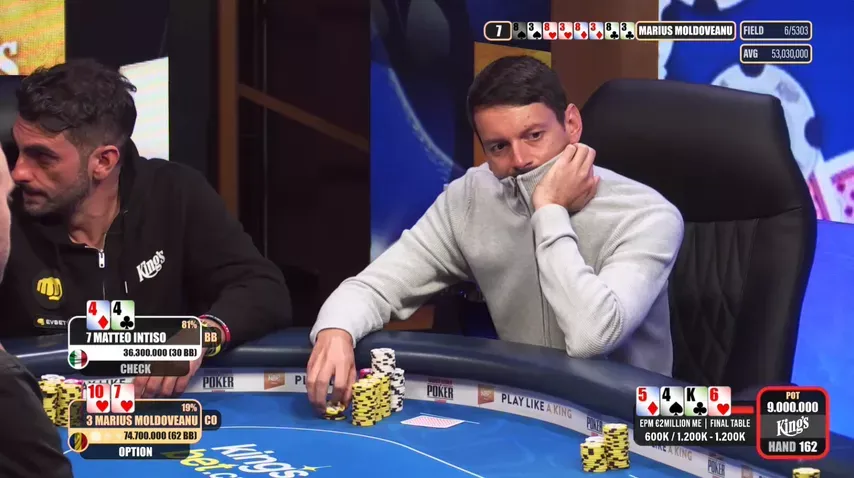 Marius Moldoveanu has everything according to the system: two hearts – two boats.
However, there are also plenty of counter-examples that do not confirm the theory.
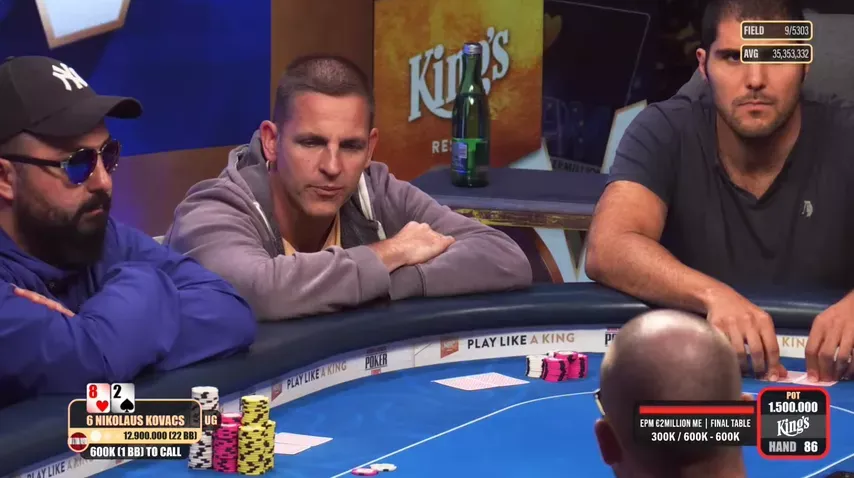 Here Nikolaus Kovacs would seem to have two "boats", but only one is visible ( timecode )
Danang Poker Tour:
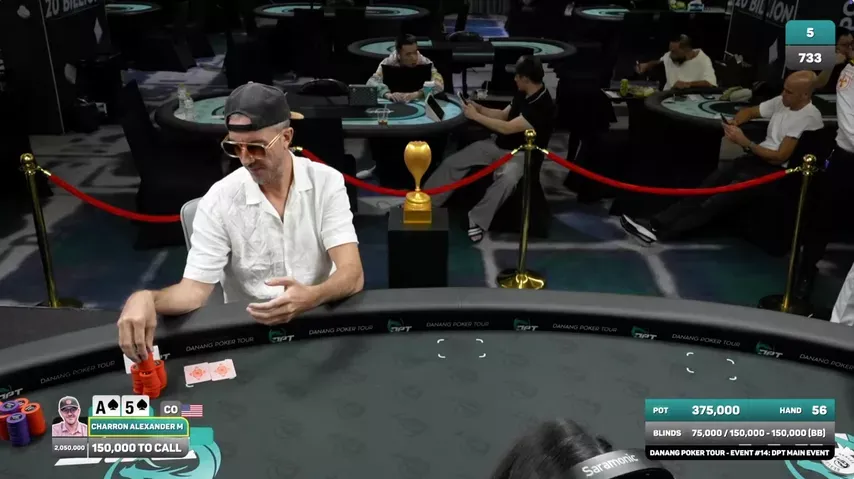 The deformation of Alexander Charron's cards is particularly noticeable in the video when they are pressed onto a table above an RFID reader ( timecode ).
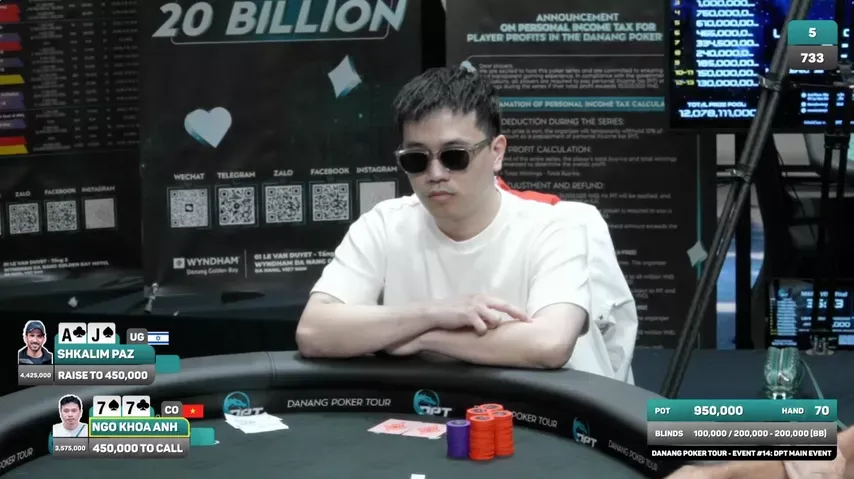 Ngo Khoa Anh has two sevens: one with a corner raised above the cloth, the other with the middle ( time code )
Is This Coincidence, Fraud, or Wear and Tear?
The curvature of cards is common in live play. But such it shouldn't be so consistent, as players bend cards of different suits and denominations with equal intensity. "Boats" and "humps," according to Lyalin's theory, are deformed according to certain patterns:
The degree of curvature of the card is related to its denomination.
- Spades (boats), aces, twos, and threes are the most curved. The higher the value, the less the curve.
- The crosses (humps) are deformed in the opposite way. The most humped are the kings and queens. The lower the denomination, the lesser the deformation.
- Another rare feature is that if the card is split in the corner, it is most likely an ace.
Rinat Lyapin offers 4 versions of explanation:
- The cards were marked by one of the players . Deliberately bending cards is one of the oldest methods of cheating. It's impossible here because uneven cards are encountered immediately after the deck is replaced with a completely new one.
- Cards are marked in casinos . If the casino were to rig the tables, they would have more subtle methods at their disposal. For example, by transmitting information to their "insiders" through the broadcast director. Marking cards in a way that a casual guest could notice is too crude.
- The cards were compromised by the supplier during shipping from Australia . The likelihood is low—it's very difficult to counterfeit such a deck.
- A pre-made "bad" deck from the manufacturer . A similar deck helped Phil Ivey win millions at baccarat several years ago , which he later had to sue the casino for.
At least one more version suggests itself: the defect was made in production, but not due to malicious intent, but to technological defects.
Alexey Li:
We suspect that [the defects] are due to different chipping technologies for some suits and different printing techniques. Another possible cause is improper packaging technology and uneven pressure on the cards during storage and transportation.
There is another hypothesis: some clubs or casinos may use budget cards from less reputable providers.
Many RFID decks available on AliExpress are made by a Chinese company based in Shenzhen. Rinat ordered one of these decks and discovered that the cards deformed according to specific rules.
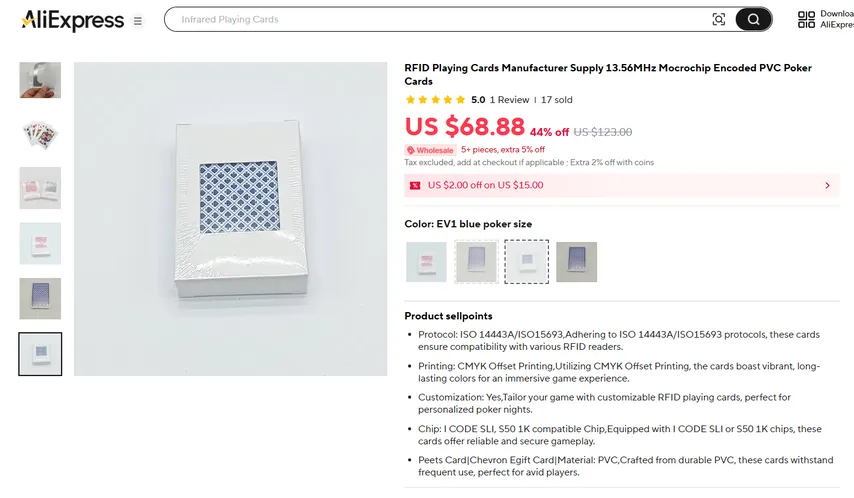
Rinat recorded the unboxing and testing of the new deck on his Telegram channel. First, he demonstrated that you can cut the deck at the spade card: the curvature of the cards creates a gap on the side; the greater the curvature, the closer the card value is to the ace of spades. When opening a new deck, these gaps are not visible because the cards are sorted by suit, smoothing out the effect. But shuffle them, and "stripes" appear on the side cut.
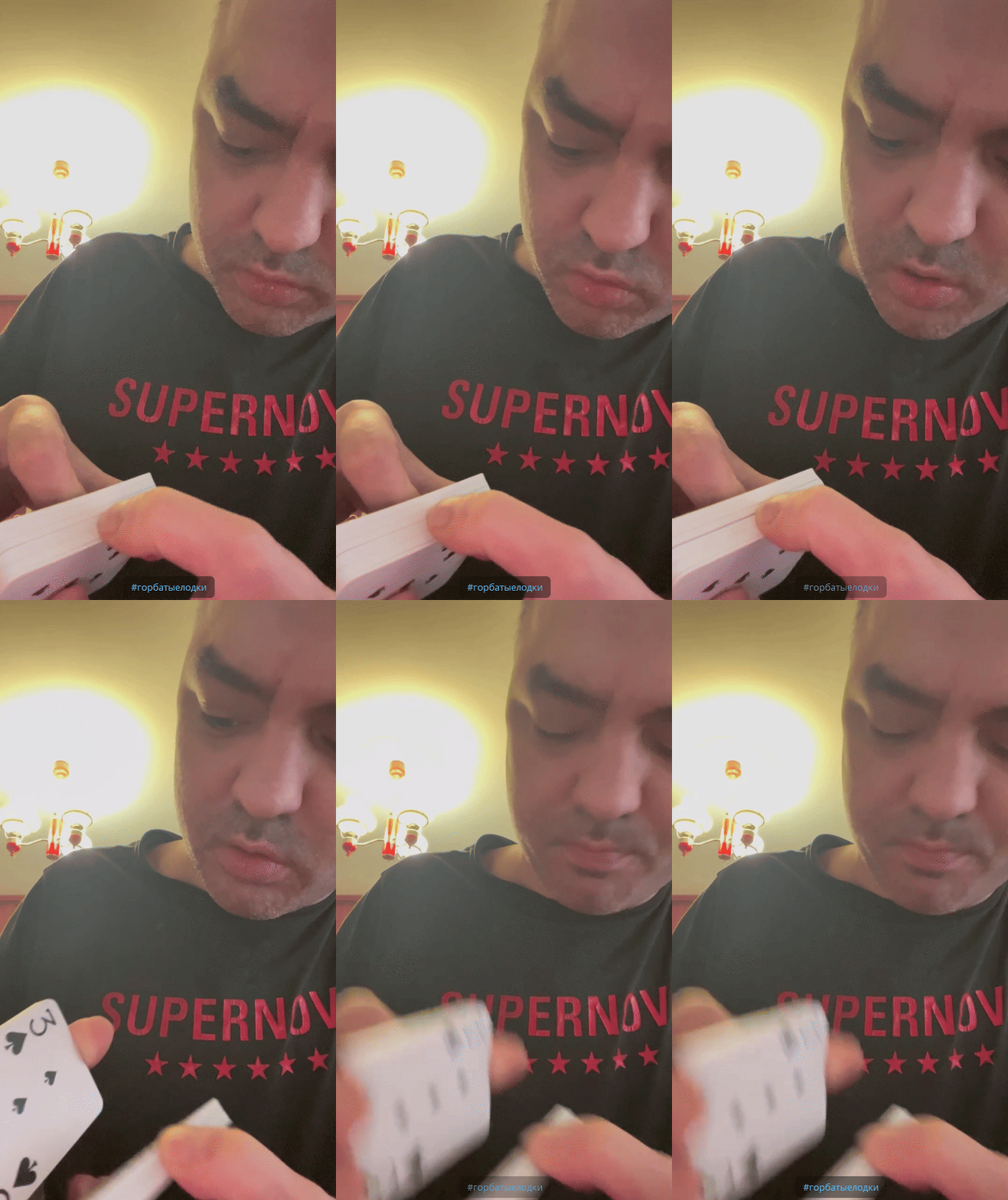
The next test is whether the "boat" will spin more if you throw it on the table with some spin (as dealers often do). If it spins vigorously, it's a spade or a heart. The video shows some unsuccessful attempts, but most of the predictions are accurate.
Other factors also influence the accuracy of guessing: viewing angle, lighting, the relative position of the cards, and the temporary bending that occurs when picking up the cards. But in any case, guessing is no longer random. Eliminating specific suits and knowing the value with a slight margin of error already guarantees a significant advantage.
What Do Poker Regulars Think?
According to Alexey Borovkov, at the 2025 Brazilian BSOP Millions series in late November, "crooked decks were the talk of the town," but the organizers couldn't resist broadcasting them on TV. They came up with a solution: dealers would deal cards in a way that actively rotated all the cards, and players would "protect" them from view.
It seems like the card problem would be easy to solve. Organizers simply need to purchase a new batch, verify its quality, and show the players the decks before the TV finals.
However, Lyapin isn't the only experienced live poker regular who might have noticed such a graph. Therefore, the community is asking another question: who noticed the defect and quietly exploited it?
Avr0ra:
It would be interesting to identify those who used this scam. It's possible, in theory, since it only worked on TV tables.
Once again, I'm convinced that you should play live only for fun, and even cover your cards with your hands, like Kabrkhel. Besides the smart guys who mark the cards—in America, older players consider this part of poker skill—here, the deck maker also preemptively marks the deck.
Inner:
I'm almost certain that there were observant players who exploited this to the fullest (the same Kabrkhel comes to mind; remember the scandal where he brazenly tried to spy on his opponents' cards, saying that he was counting the stack).
As far as I understand, there's no fraud charge here, except perhaps for unethical conduct against those who exploited the situation. Still, it would be nice for the community to know its heroes.
The hype has also drawn the attention of other observant regulars to the "boats and humps" problem. Mikhail Potemkin, known as BlackStack94, rewatched his own WPT final table in Thailand and also noticed quite a few "boats."
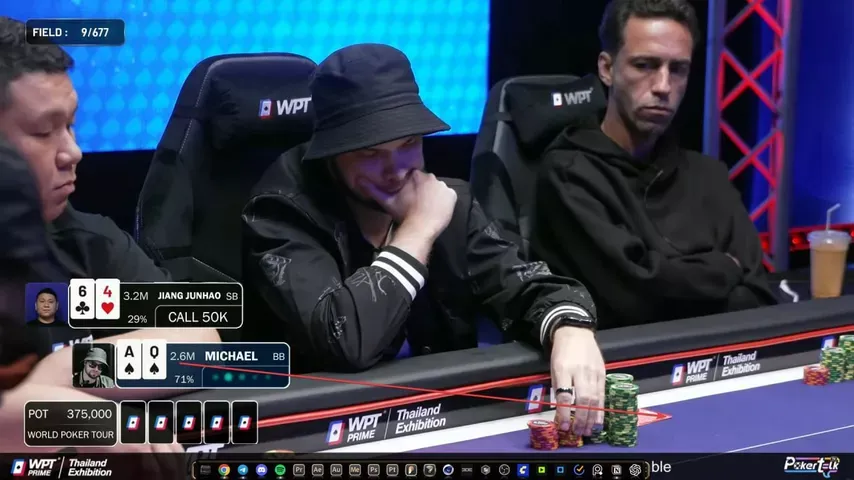
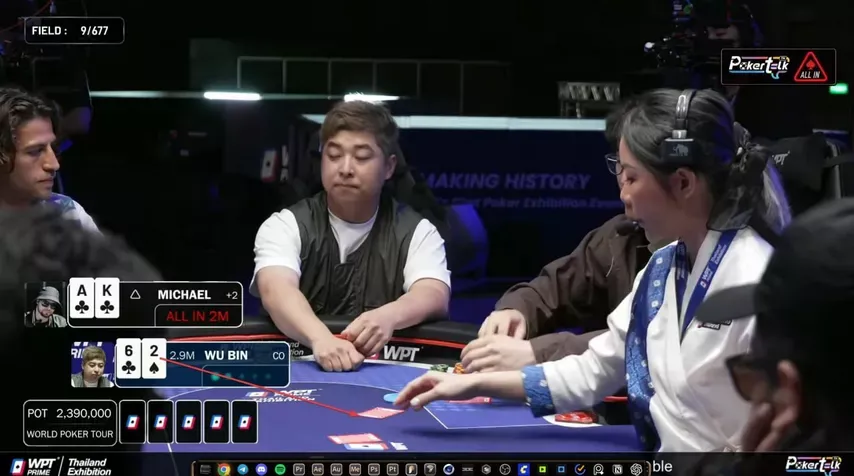
An excerpt from Mikhail's post: "What seemed like a simple coincidence turned out to be a pattern. I can't yet see the graphic representation of the player's hand, but I already know if there's a spade there. Out of 10-15 checks, I've only made one mistake!"
Problems with TV broadcasts in Brazil, Russia, and Armenia
By the end of November, a wave of suspicion reached the shores of Brazil, where the 2025 BSOP Millions series was taking place. Martin Kabrhel, who has been accused for several years of exploiting unfair advantages in gaming situations, came under attack.
The approximately $100,000 tournament was interrupted because local regulars suspected Kabrhel of cheating. Such accusations are nothing new to the Czech, so he simply smiled and shrugged.
Read ReadThe organizers changed the deck to a similar one.
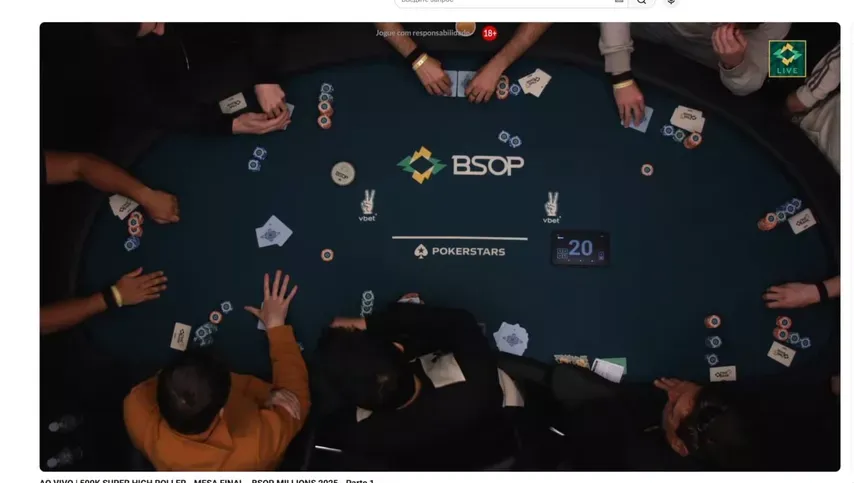
Martin continued to actively cover the cards with his hand. Because of this, they were occasionally not read by the equipment and were not broadcast.
Darya Krashennikova and Vladimir Minko made long runs in this series. The broadcasts show them trying to shield their cards from view.
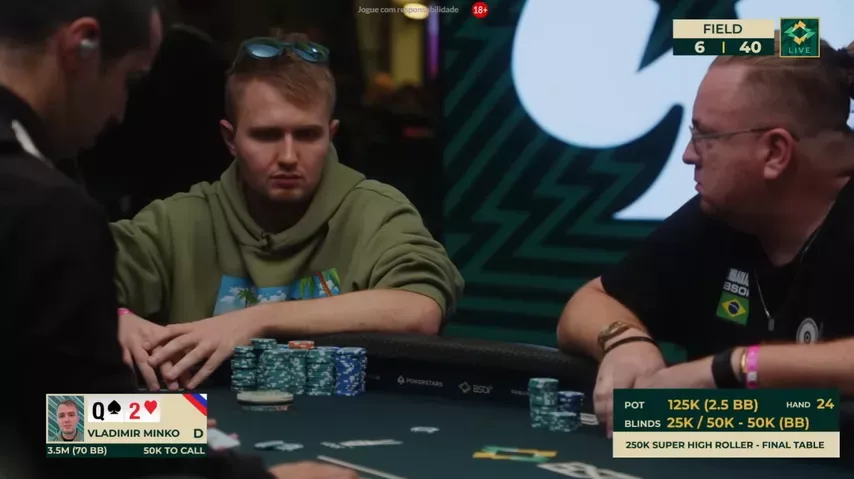 Vladimir Minko in the $100,000 Super High Roller
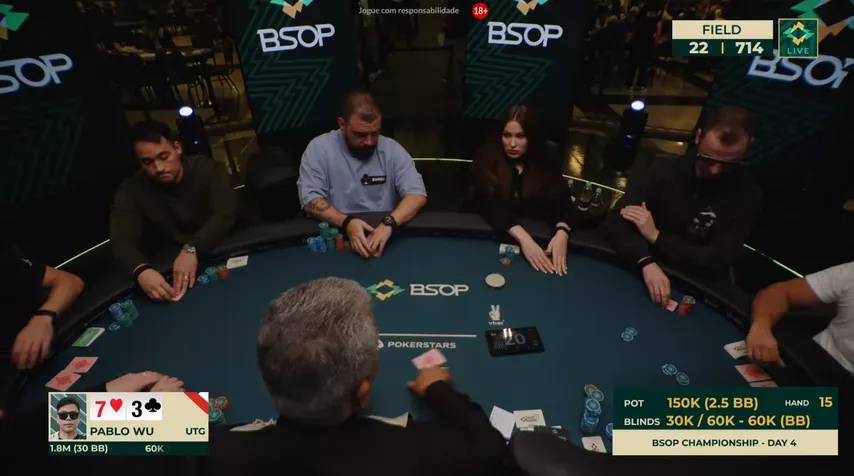 Daria Krashennikova in the top 22 of the main tournament
In December, organizers around the world began to respond to the problem:
- On December 7, the TV broadcast of Kaliningrad Cup APC 39 was conducted with closed cards.
- On December 8, the Russian Poker Tour announced that all TV broadcasts of the RPT Minsk Grand Final had been cancelled.
Eric Shahbazyan, organizer of the Russian Poker Tour:
There's a company that makes the television equipment is Australian, and we also buy RFID cards from them (very expensive ones). We just received a new batch, opened them up under the cameras, and saw there were problems. We recorded a video and sent it [to the supplier]—let them deal with the manufacturer; it's clear there's some kind of defect.
In these circumstances, when you can't be 100% sure of fair play, we decided to cancel the broadcast.
Problematic decks were even discovered at the most prestigious series closing out 2025—Triton Poker and WSOP Paradise in the Bahamas. For example, Damir "miracleQ" Gabdullin noticed boats and humps.
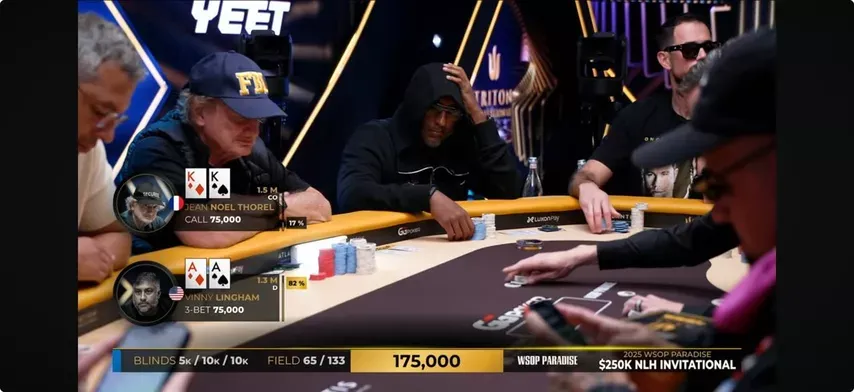 Damir: "Guess where the ace of spades and the king of spades are."
Artur Martirosyan was concerned about the quality of the cards during the series itself. He learned from the organizers that the cards used were high-quality, all identical, specially smoothed and checked at the factory, and that any defects could only be caused by players.
However, the next day, Arthur said that the decks still turned out to be problematic:
I'm conducting my own investigation on the spot with the tournament director. Yesterday he told me everything was perfect, but today the cards still had defects. I was guessing a lot of my cards.
We started testing various theories, including different cards: both straight out of the box and after they'd been dealt for a while. Some patterns emerged.
The director can't do anything right now because there's nowhere to get new decks. They just decided to tell everyone to cover these cards well with their hands.
The cards aren't as flawed as Rinat described. They're quite good because they're straightened and pressed. That's why they're initially quite smooth, but after a while they return to their original shape, and similar defects remain. The patterns are slightly different, but they're there. When we figure out what kind of cards they are, I'll let you know.
To avoid constantly having to keep their hands above the table, those who end up at TV tables have to get creative: placing chips, time bank cards, or using larger and heavier card protectors on the cards.
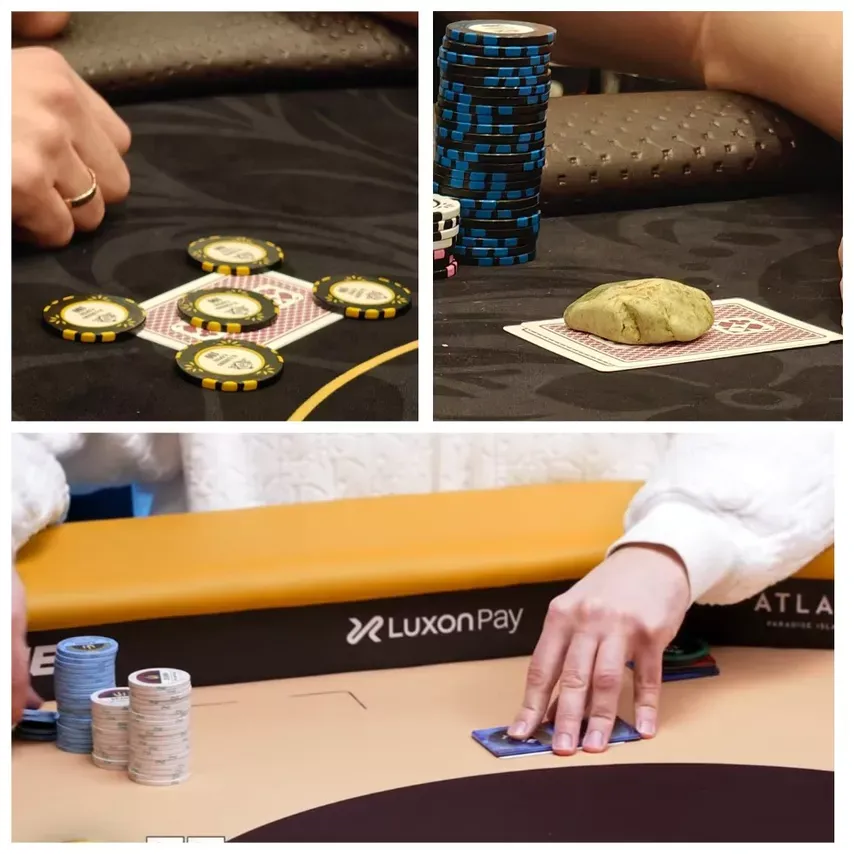
The Belarus Poker Tour organizers confirmed that they are also aware of the chipped card issue, but they are using decks from a different manufacturer—defect-free and several times more expensive—for their live broadcasts of their events:
We have a large number of decks for TV broadcasts: three main decks and five or six new spare decks. We check the cards visually before broadcasts and also check them for readability in the players' boxes. We've been using decks from our manufacturer for over seven years, and we haven't had any serious issues during that time. There have been isolated incidents of loosening or unsuccessful attempts to read a card, but these were resolved in a matter of seconds: the spare deck is always kept two meters from the dealer.