






Chance Kornuth: We got a pretty crazy one today. Normally, when you're at final tables, first and second place when they're massive stacks compared to others really don't collide. So, we got something a little bit special today.
First, I'm going to paint a little picture. There's five left, 120 person field, and a 150k buy-in. And these guys are playing for a lot of money. I don't know how to say this guy's name. Vladimir Korzinin. But more commonly known as Gambledore, a cross between Dumbledore and a gambler. And he's an absolute legend.
Why don't you tell the people a little bit about this guy if they don't know?

Alex Foxen: So, I actually almost feel bad even talking about him because I know his privacy is really valuable to him. I became pretty friendly with him during this Monte Carlo series. Very interesting character. He just lives this nomadic life, but he is super, super wealthy. He likes to stay out of the limelight. He likes to be called Santa. Actually, that was the name that I called him: Santa. That's why he had elves following him around during this series.
He's just an absolute enigma of a person. He actually stopped playing poker because of the attention he got. He didn't like being in the spotlight so much, which again I feel kind bad because he is such a sweet-hearted guy. At least as far as I can tell. And he was very new to poker and he just loved the game.
I remember one of the first hands I played with him. I bet the river and he says, "I know I don't have the best hand, but I want to see what you have." And so he calls off his stack and he had complete nothing. And he was just actually just curious to see my hand. And I was like, "You could have just asked. I would have just showed you," but I was grateful for the call anyway.
He loved the poker community. I remember he kept repeating that, "Oh, just so many beautiful people in here." He's a big fan of poker—the people that are in poker—not just the game itself, of course, too, but an interesting guy. Very new to poker. Very unconventional, weird lines at times. Actually had some people suspicious that he was cheating. I think it's very unlikely, but I don't like to assign anything a zero probability that I don't know for sure.

Kornuth: Yeah. I mean, I think people like to say that when they play poorly against a fish.
Foxen: They're like, it doesn't compute in their brain that someone can just have good things happen and maybe make some decisions that under certain parameters are actually really good. And that's something that I think is really valuable when you watch someone like this play: to open your mind to the idea of maybe something he's doing is really effective and ask yourself when you see something, especially from a player that you respect, but even when it is a player that you don't respect, ask yourself: Is this something that makes sense? How can I make this make sense? What parameters can I put on this situation that might lead to this decision being a good one?
Whether or not the answer is yes, it's good if this, if X, Y, and Z, or no, it's never good, it's still a good and valuable thought experiment to just see the game through that lens because maybe it'll open your eyes to some course of action that you wouldn't have otherwise considered.
Kornuth: So, speaking of, let's see who he's in the hand with.

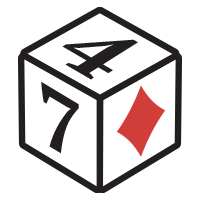
So, he's going to come in for a raise here with , 57 big blinds, super standard.
Foxen: I don't know what he does here sizing wise, but he's actually at a table of two people at least that I think are quite good at playing against this player type. And those people would be Fedor Holz and Bryn Kenney.
I think Stevie is probably on the better end of the spectrum too for this. But now we're looking at someone who I think might be one of the worst players against this player type in the entire field.

Cornut: And I made the "does not compute" joke, but in reality, Sam Greenwood is one of the most terrific solver players that there is. However, he's not playing against a computer. He's playing against Gambledore.
Foxen: He's very much just thinking about what does the chart say in this spot and how frequently should I do this? Let's see what the clock is. Okay, it's at 80%. That's high enough to raise. Let's raise. I assume he just defends here, but yeah, no, he does just defend here.
Kornuth: You know, it's second in chips against first. Recreational super fun player.
Yeah, if you're ever considering anything but call here, I don't know what to say. Don't do it. Well, we can just say it's bad.
So, he does make the call. Oh, and we get the .

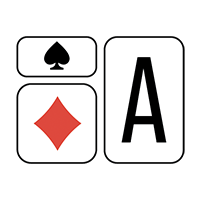
Greenwood flops a monster.
Foxen: He's even a favorite in equity against two queens – gutshot, overcard, nut flush draw... An interesting spot against a player who could have pretty much any two cards.
Kornuth: He's actually an equity favorite against pocket queens with a club. Massive gutshot overcard. Nut flush draw. Massive hand. Is deep in an interesting spot against a player who can have just about anything here. Whatever the whimsical breeze may take him.
Vladimir Korzinin bets 750,000.
Foxen: This is a brutal one. I don't think I've seen this hand before. And this is a very tough spot because we are an equity favorite against a hand as strong as queens or kings. We're doing fine against top set. We're doing fine against all the sets. We are in a spot where raising can't possibly be bad. Getting more money in can't possibly be bad. But you have to ask yourself, "Is there a better way to play this?"
We have a strong hand, strong draw. We don't want to check-call and have a weird decision on the turn. Like, what if we call and then he just over-bet jams the turn on an ? Do we just call it off with this draw?
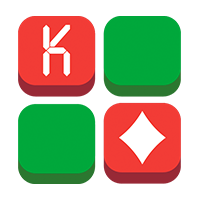
He might have and do this—who knows what this guy has.
So I think that it's very hard to be critical of any decision here. I think there are examples of times where Sam misplays hands against this player type. No matter what he does here, I don't think it's likely that this is one of those scenarios.
However, at first glance, my instinct is that I would want to just call here because I expect raising to accomplish very, very little. Sure, we don't want to run our equity as a 52% favorite against Vladimir here—and remember if he has a hand like , which is not outside the realm of possibilities, now that equity drops to closer to 40% or so, maybe even less, 38% to 40%. So, we do have some circumstances where we can be in a lot worse shape than we are in this specific one.
So, here is how I would frame my decision: I would ask myself, does this over-bet range have any folds versus a raise that would keep barreling on the turn? I think that's the main question you need to ask. Are there hands that would fold to a raise that would barrel the turn? And sure, that's somewhat dependent on what the turn is, but for the most part, I think we can pretty comfortably say that there are some, but maybe not that many would be my interpretation. And the over-pot size, I think, is almost always just going to be a hand that's one and done or a very strong value hand. With that in mind, I lean call. I just finishing that: I lean call.
Kornuth: Yeah. And that's kind of the biggest factor here: the weighting of the larger size.
And I haven't played with Gambledore. I would expect the common weakness in the new player type that he is is typically bet size is directly correlated to strength. And so I would expect him to be strong here way too frequently and you're effectively just running it when you're in the ICM cage, and you can probably fold into third place even if you do call and lose the hand and are forced to make some crazy turn fold. So, I definitely lean call as well when covered by a player who's folding or or over-pairs probably zero percentage of the time.
Foxen: The other thing to consider is how often does Vladimir get away from some kind of value hand when we turn the nuts. And I think based on his play style and what we've seen, it's close to zero.
Cornut: Let's see what Sam does.


Foxen: You just face the size that you're like, "Can he see my hand? I'm shocked that he's jammed in the spot. What on earth?" Which, I guess if you were actually Santa and you could see his hand, normally just check back or go all-in.
Kornuth: I would expect that the reason Sam shoves is because he doesn't know that he's very likely to get paid on turns anyway. He doesn't know that. And they're just guessing and you're like, "Well, I have a good hand. Maybe I have fold equity. Let's just rip it in and see what happens."
Foxen: Yeah, it can't be that bad. It's one of those thought processes where, how bad can shoving be? And then how bad can it be when you check-call flop and then check-fold turn and he has ? Then that's an absolute nightmare. So that's probably some of the decision-making process that he went through, which I think there's good logic behind that.
If you're sitting there thinking that getting it in can't be that bad, but calling opens me up to making really big mistakes on the turn potentially.

Kornuth: And I will say if you are going to choose a raise size, I think all-in is the best one. You don't want him to take the or offsuit!
Foxen: Yeah, definitely. I mean even if we look at what SPR will be, it's really only like 160% pot shove or something like that. It's not really that big. The other option as far as a raise would be just min-raising, which I think more or less accomplishes nothing.
Kornuth: I guess the only upside to min-raising is that maybe we get king-queen of diamonds to put it in, and you might get some call-folds as well. So if he has / , they might just be like, "Okay, fine. I'll call," and then they fold every turn they don't improve on.
Foxen: Yeah, I think it's closer as far as which I prefer because I do think the min-raise... we're getting it in and when he has a hand like this, he's never folding. Sure, we might get ace-king and ace-queen to fold, which is nice. But then when we min-raise, we might induce action from some worse hands.
It's very difficult to analyze some of these hands where who knows what this... there is a chance that this over-bet size on this board for Santa might just always be a ten, like a good ten or better.
Kornuth: There are some pretty strong merits for doing that if you think your opponent responds that way, and that's the beauty of poker: you can design the set of information to make any decision the optimal one.
Foxen: Having that internal discussion is not easy to do in-game with thirty-second shot clocks, but it's a muscle that you can work over time.
Kornuth: Yeah, no doubt. Well, let's see how it plays out. Any guesses what Santa's going to do?
Foxen: Oh, he asked how much it is. So, he doesn't even like this.
Kornuth: He might just be curious. I've seen people do this with aces pre-flop before.
Foxen: But it wouldn't surprise me if, after the fact, he would say, "I just wanted to feel the moment a little bit longer." He just wanted to experience that moment of a big spot, you know? So now all of a sudden we're flipping a coin for what is this? Half the chips in play, or more?


Kornuth: And now Sam just went from getting top four or top three a massive percentage of the time to being out in a twice-at-150k final table.
Foxen: Look at this turn. This is actually the perfect example of what I mean. It is literally the card that I was describing, and I swear I didn't remember what it was.
If he calls the flop and gets this turn card, he's going to have 3.5 million and the pot is going to be 2 million. He can just make a very easy math decision on the turn. If Santa goes all-in, well, he doesn't get the right price to call. Simple as that. If Santa bets anything less than pot, he gets the right price to call. He gets to make a very easy decision on the turn on this type of card. And I think that unless you fear Santa bluffing the turn with some kind of nonsense for a huge size... I think there's a chance that Santa double-barrels light, but I don't think he goes over-bet, over-bet, all-in with nothing.
Because of that, I think we get the opportunity to make a really good decision on the turn by being like, "Okay, he bet 75% pot; maybe he's bluffing, maybe he's not, whatever. Now I get the right price to call and see what the river is." He goes all-in? Well, now I can pretty confidently say he's not bluffing and, since I hit the complete brick turn, I no longer have the right price to continue. No harm done. And honestly, he would have been left with 35 big blinds, probably would have been second or third in chips still.
That is a pretty big swing in the EV of your tournament: call versus jam. Now, of course, he could have just peeled off a club or an ace or a three and had 70% of the chips in play, and that's a pretty big swing to your tournament as well. But I think by calling, you mitigate a little bit of your downside risk and you increase some of your potential upside—or you don't necessarily decrease it very much.
Kornuth: Yeah, and I'm sad I didn't get a chance to play with Gambledore. That was none of the Triton Poker series that I went to.

Foxen: Yeah, hopefully he'll make a comeback soon. I know that Jesse Lonis is actually very friendly with him, and they email occasionally. So, hopefully, we can talk him into coming out of retirement at some point because it was very fun to have him around.
I think he won six or seven million on this trip. He made one more trip and his goal, he said, was to give some back to the poker community because he didn't want to... so he came to Montenegro after this and was really trying to give it away. He successfully gave it away that time and we haven't seen him since, but hopefully we see him resurface at some point.
Kornuth: He really is Santa Claus, man. What an incredible story.


From the comments:
@PuntOfTheDay: Hi It's Sam Greenwood here,
I gave my thoughts on the hand over at Punt of the Day. YouTube seems to throttle links to outside sites, but if you find your way over to Punt of the Day. It is #101. I enjoyed hearing Alex and Chance's thoughts on the hand.Basically, I'd seen him make a lot of overbet c-bets throughout the tournament and he rarely gave up after making a big c-bet size. I felt this was something he might regularly do with hands like and and he might shove the turn with them and I wanted to make sure I saw all five cards with my hand. In hindsight I think he is so live to make a giant mistake on the turn or river if I make my hand that I should have just check-called the flop.
@nateparentpoker: Sam, would you be jamming value on the flop? Assuming your only value against over bets is 22,44 or maybe 104s if u defend pre. I just don’t see you jamming sets there, you’d either trap or small raise. And maybe it doesn’t matter to be balanced there at all against a rec, but I just don’t see you jamming value ever.
To be clear, I don’t think you played it wrong lmao, just am curious
@PuntOfTheDay: I would never jam a set, but I don't really think it matters all that much vs him. I am not concerned that he will put me exclusively on draws and call me with . My most likely value hands here actually might be funnily enough no club