The No-Limit 2-7 Lowball Draw event was won by 44-year-old Japanese mixed game specialist Naoya Kihara.
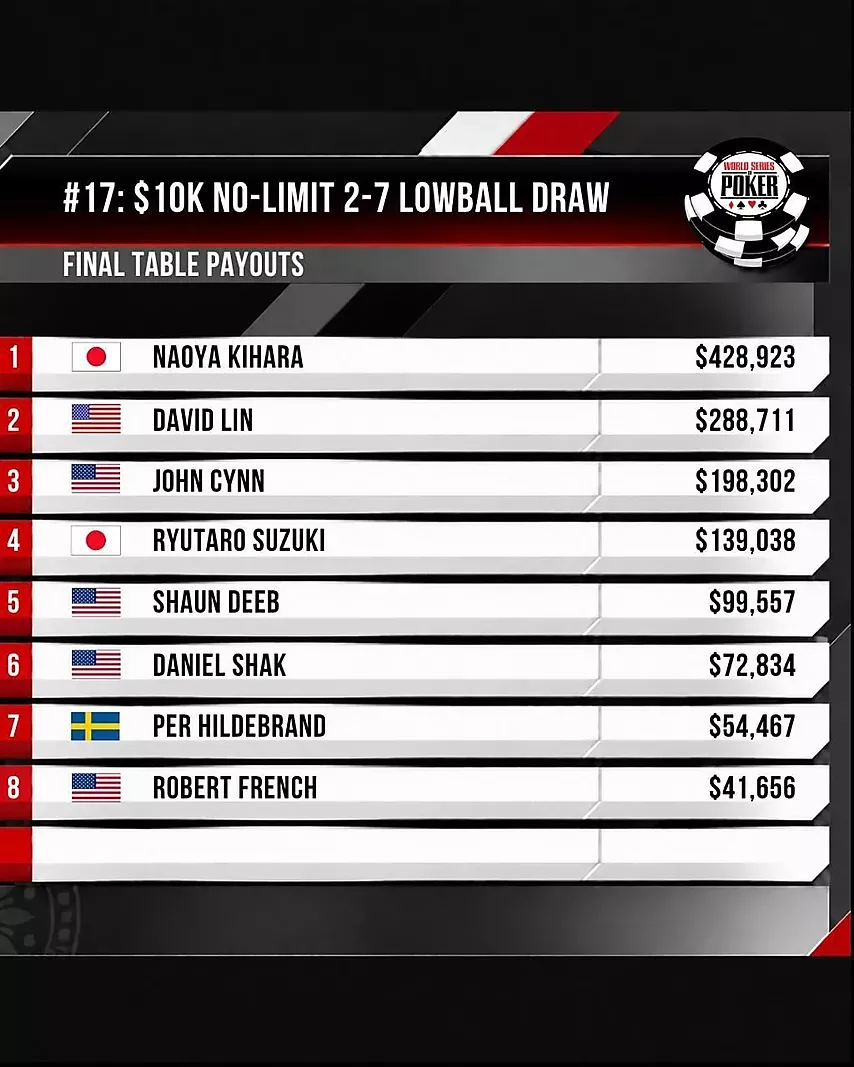
On the first day, after an unsuccessful bluff, Kihara was left with 1,000 chips from a starting stack of 60,000, but managed to spin up and win the bracelet.
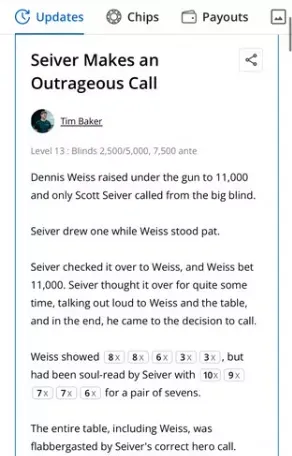
The goal of all 2-7 games is to make the worst possible five-card hand. Scott Seiver called in one hand with a pair of sevens and was right :
"No limit single draw is maybe the most beautiful game there is, and I might be one of the hardest players to bluff. Really proud of this hand even though it’s a small pot."
Daniel Negreanu came in 20th place, and Alex Foxen (who has shown increasing interest in mixed games) came in 11th, but busted in the money. On the bubble, they played a hand that left a lasting impression on Daniel.
Negreanu Calls Out His Table!
— WSOP – World Series of Poker (@WSOP) June 4, 2026
After some questionable play near the money bubble on Day 2 of the $10,000 2-7 Lowball Championship, Daniel Negreanu managed to survive with just a few big blinds.@RealKidPoker then doubled up through one of the greatest no-limit hold'em players,… pic.twitter.com/0NGVwUWJer
At the 5k/10k level, Negreanu moved all-in with a 55k stack. Alex called and drew two cards.
"How many?" Daniel couldn't believe it. "Two? It can't be. I'll have to keep this junk. I was going to replace one, but now I won't."
Daniel opened , Alex – .
— Foxy, it turns out you're a gambling addict.
Alex drew a nine as his first card.
— Now you are a big favorite.
But the king came second.
— Ha, you're such a bad player. You should go back to hold'em.
Naoya Kihara's next tournament was the $10,000 Stud Championship, which he also won.
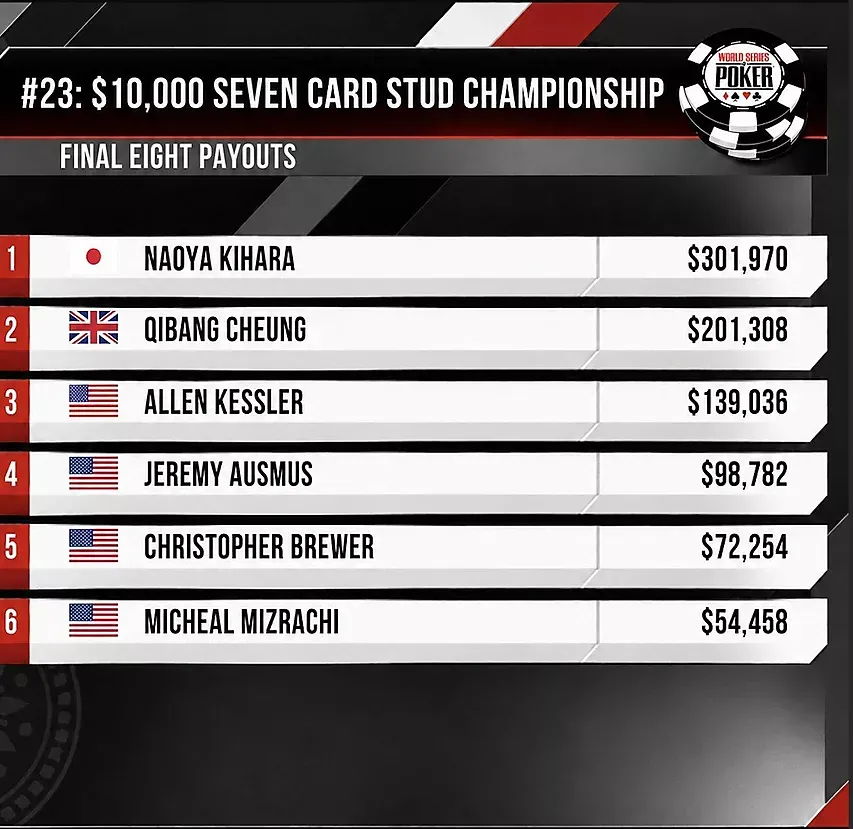
Kihara now has three bracelets, the first coming in 2012 in a $5,000 PLO tournament, which was the first bracelet in Japanese history.
Michael Mizrachi, who started the final day as the chip leader, missed the start of play; he arrived 15 minutes late. He was celebrating a successful second day at a strip club too much. This apparently also affected his play.
Allen Kessler came in third.
Phil Hellmuth and Michael Matusow didn't play in this tournament because they went to the Stanley Cup Final and even appeared on the overhead screen.
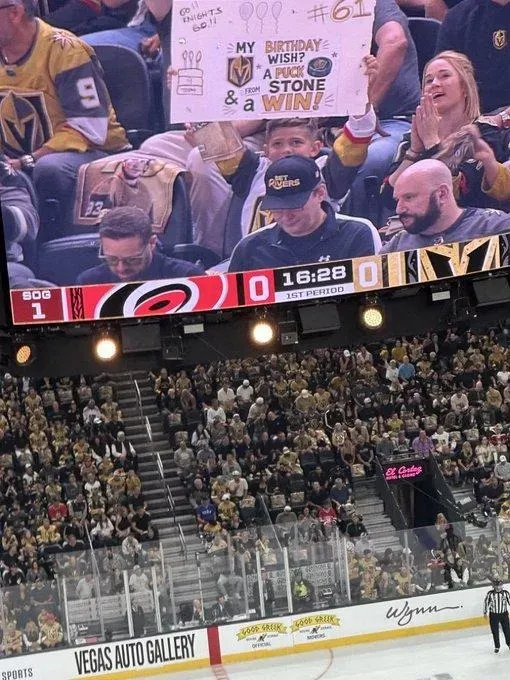
"How can you skip a tournament like that for some hockey game?" Allen was amazed.
"That's what normal people do," Jason Kluska, who finished in 8th place and looked very much like an amateur, explained. "They live normal lives. Poker isn't life."
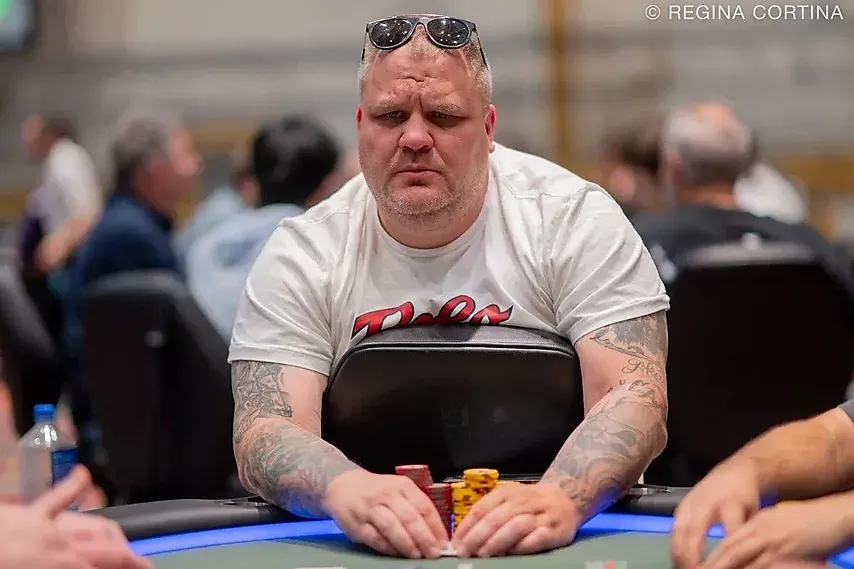
"For the first time in their lives, Phil and Mike were called normal people," Chris Brewer noted.
Kihara's heads-up opponent, James Chen, was also vying for a second bracelet at this series. He won the junior version of this tournament, the $1,500 Stud, early on.
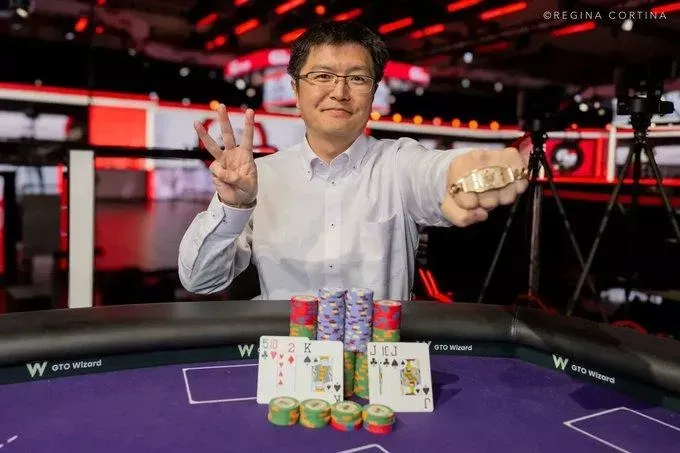
Naoya Kihara is a very active Twitter user. He registered in May 2012 and has since written 64,500 posts, averaging over 10 posts per day. Even during the final table, he was constantly updating his stack and announcing his opponents' eliminations.
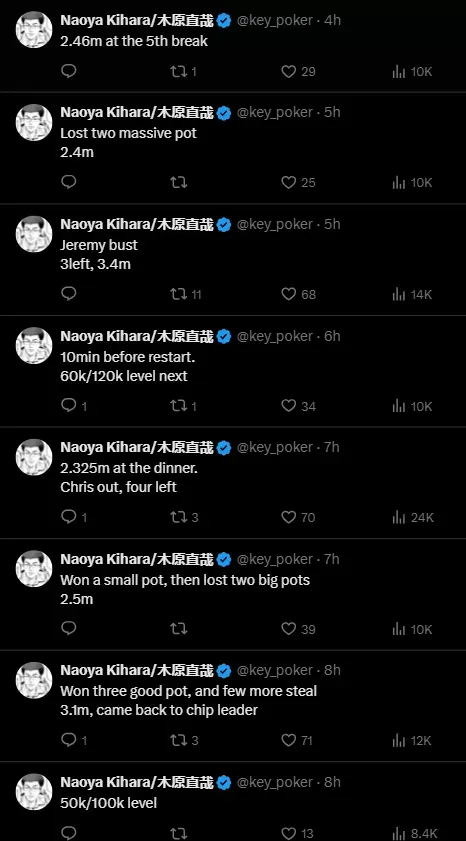
Before the final table, Naoya noted that stud requires constant attention:
But of all the games, stud variants are the most exhausting.
Because you have to memorize the entire board.
Like with 2-7 or getting five cards dealt, you can just zone out until your turn comes, but with stud, you have to check your own cards before the board comes out, then memorize the board afterward... so purely speaking, the downtime is super short.
10th place was taken by Maxim Pisarenko ($24k).
In 2024, we picked up a Japanese blog's story about Naoya, where he revealed what kind of poker player he is.
"I think there are two types of competitive people. One is the type that 'hates to lose.' Because this type "hates to lose," they may avoid challenges altogether, such as only competing with people they can beat. The other is the type that 'loves to win.' I am this type, and the joy of winning far outweighs the frustration of losing, so I like to keep thinking about what I need to do to win."

Kristen Foxen won the $25,000 High Roller.
This is her sixth bracelet, her third from live tournaments.
She sported a WePoker patch, an Asian poker site that signed Patrick Antonius in 2025. Her hubby, Alex Foxen wore his ACR patch but didn't secure a bracelet yet, despite deep runs.


This is Kristen's career-best result and her fourth seven-digit score. She achieved the previous three at the Triton series this year, but always came within a whisker of victory.

Registration for this and other high-stakes tournaments this year was open throughout the first day and for the first hour of Day 2. Around 30 players entered at the very last minute and started play with 12.5bb stacks, including Biao Ding, who ultimately finished third. A total of 345 entries were made.
Second-place finisher Galen Hall has retired from poker and is now focusing on investing, but still comes to the WSOP every year for the high-stakes tournaments.


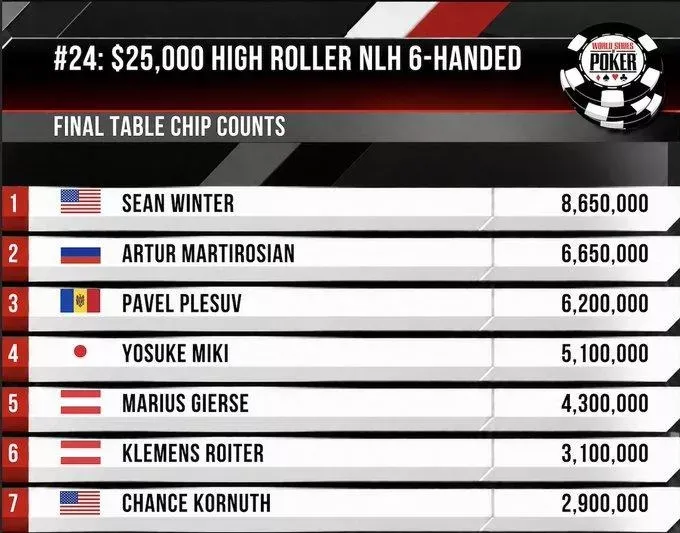
The final table of the 6-max tournament with a buy-in of $25,000 will be played out tonight.
Artur Martirosyan and Pavel Pleshuv were located immediately behind chip leader Sean Winter.
The broadcast, with commentary from Dmitry Shakhov and his guests, starts at 1:00 GMT time.
https://www.twitch.tv/pokerok_official
This tournament saw 242 entries, with 40 players joining at the very last minute – almost half the field at that point.
This caused a storm of indignation on social networks.
"If I could wave a magic wand and change anything at the WSOP, I’d get rid of day 2 registration," writes David "ODB" Baker. "I don’t think it gets you that many more people. If they want to play, they will play. End extreme late registration! I know it’s not going to happen, but for the good of the game, it should!
"This is the key point people don’t realize," agreed Scott Seiver. "Day 2 registration was an artifact of the 25 of us playing cash all night still wanting to drop a stack afterwards."
David continued. "The whole argument for day 2 reg 1 hour into play is to even out the flow of the late reggers yet they all max so still creates these situations. Just end reg before play begins if you are going to have day 2 reg"
"It's a similar situation online," Patrick Leonard agreed. "Even crossover of the same people in this instance."
Patrick recently called for a limit on the length of late registration in online tournaments as well.
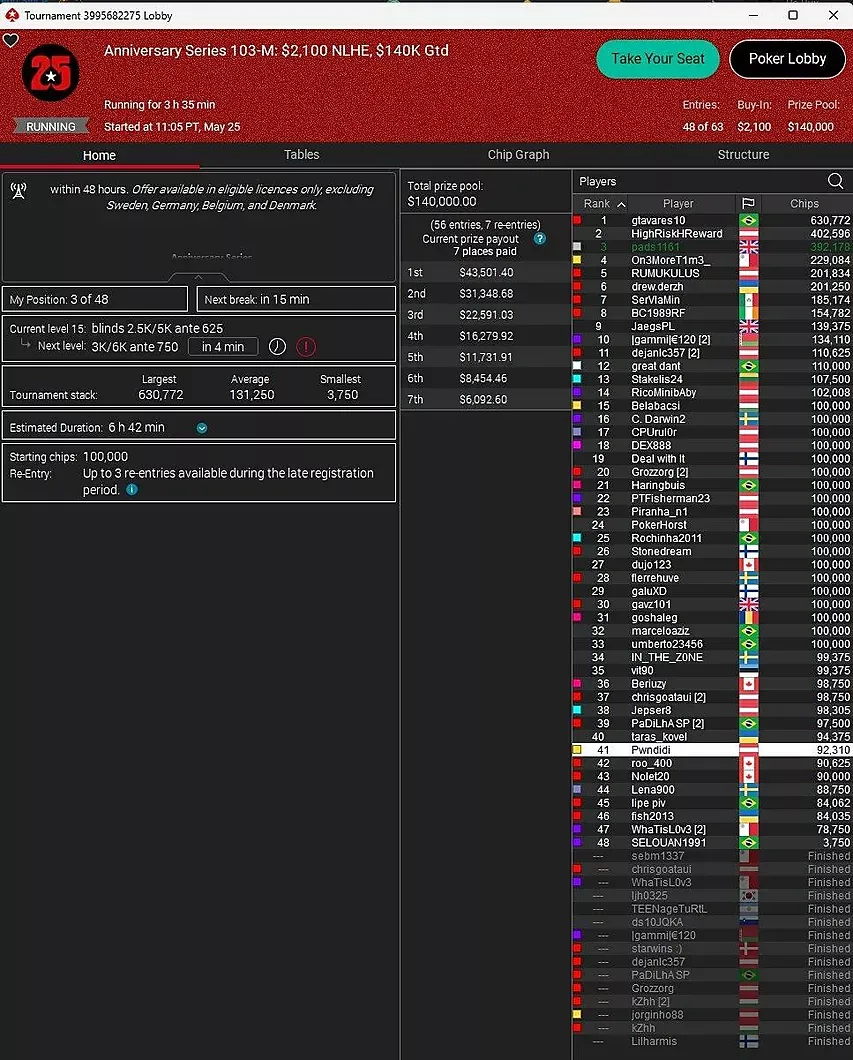
The $2k buy-in tournament had 48 players at the time registration closed, with nearly half jumping in at the very last minute:
– With 5 minutes to go, Brazilians and Austrians usually jump in, spotting attractive tables (skipping bbs, playing with weaker players etc)
As registration closes, you'll have bunch of people all jump in. Most tables will now be roughly 20bb average. Sites "data" shows that 3.5 hours of late reg is good.
This is insanity, and it's been happening for years now. All of these people would have jumped into the tournament 2 hours ago. The tournament overlays by 7 people, and there is essentially 0 amateurs in the field.
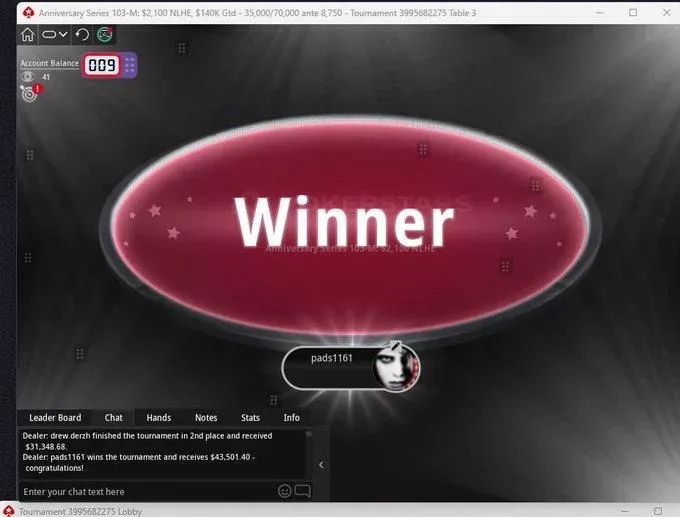
"We live in a very strange world," Pads wrote a little later. "I chose this tournament as an example in advance, then started updating my tweet with screenshots right as I was playing. And somehow, I won it."


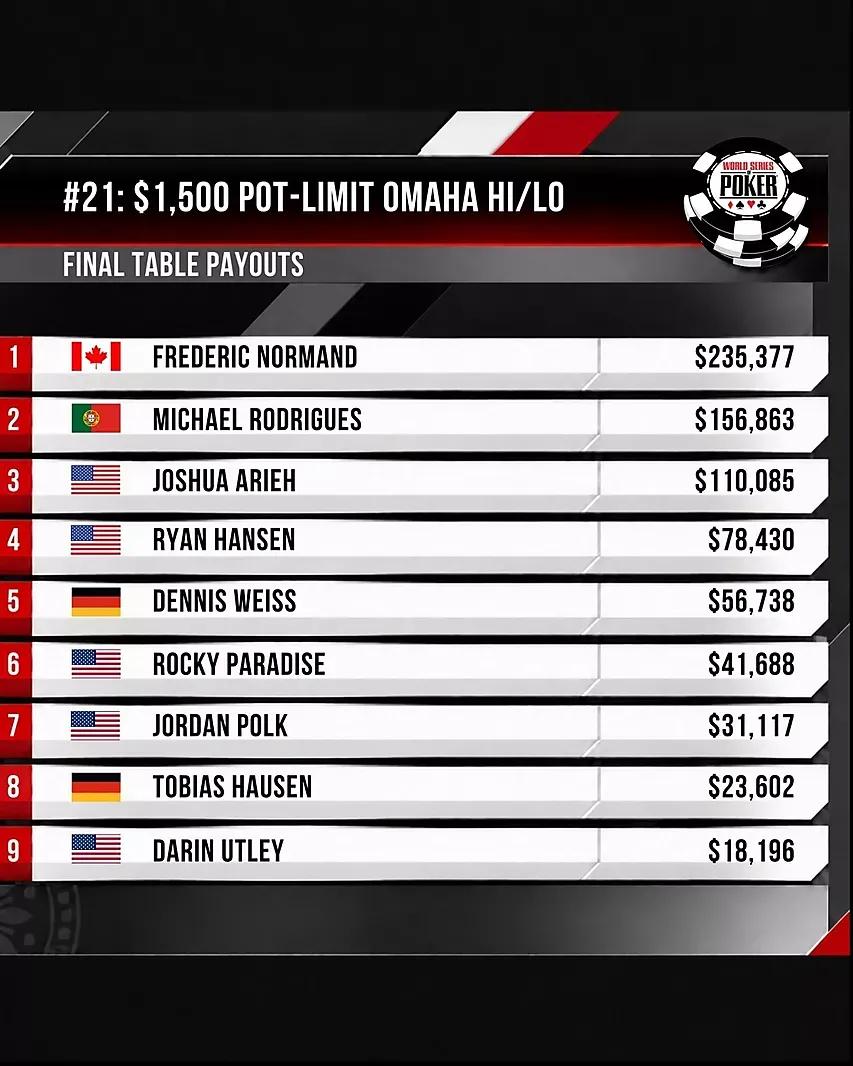
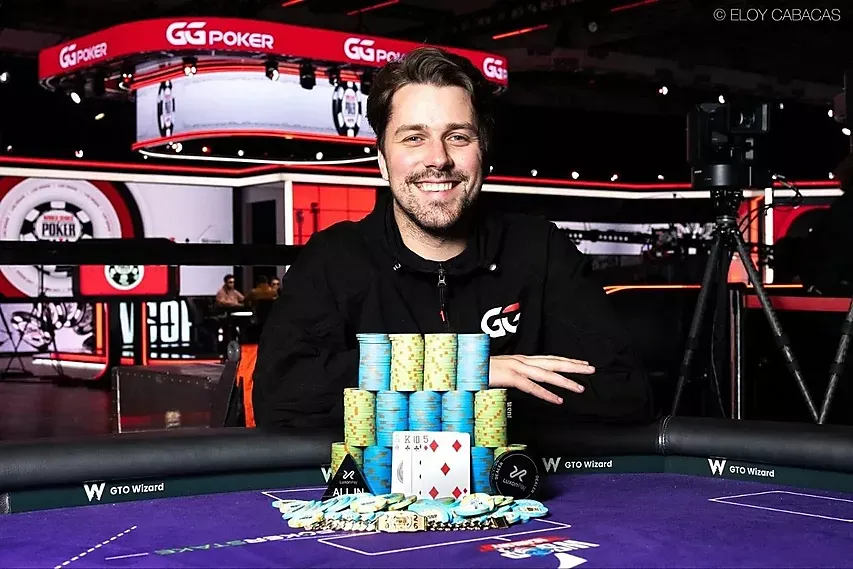
The $1,500 buy-in PLO-8 tournament was won by Frederic Normand.
Frederik has been playing high-stakes NLH and PLO tournaments frequently in recent years, but this was the second time in his life he played hi-lo.
"I played one Big O tournament two years ago, and I learned the rules there. I didn't even know that certain lows are weaker or better, and I guess I learned that yesterday when I mucked some lows."
Normand drafted himself for Team Chocolate Factory in the 25K Fantasy Draft.
A video of one dealer working extremely slowly has gone viral on social media.
Love @WSOP 😂 pic.twitter.com/49cLzuPs2T
— 🔴 JonKytePoker | Jon Kyte (@JonKytePoker) June 7, 2026
“The patience of the players is amazing here btw,” Pads noted.
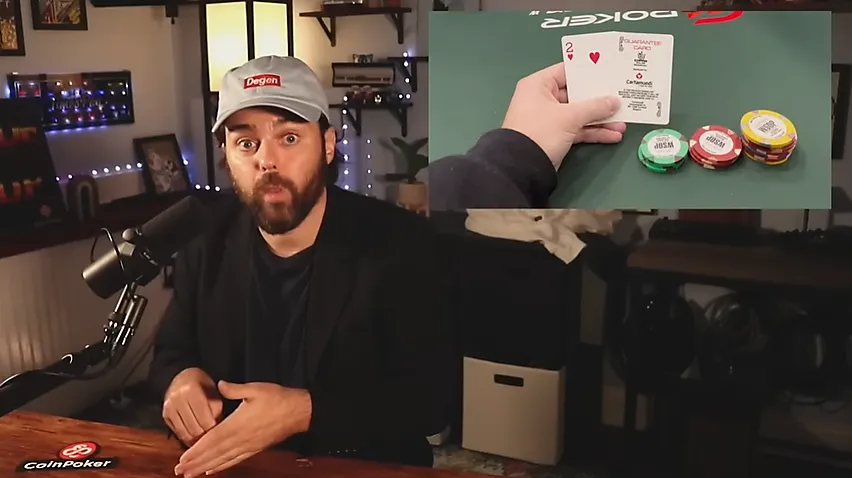
As CoinPoker's Ryan DePaulo pointed out in his WSOP update, another dealer handed out a Copag instruction card.
And last week, we saw a dealer deliver a four-card flop. The flops usually have three cards, if you didn't know.