




Online poker in Michigan has quickly become one of the most established and well-regulated markets in the United States. After legalizing online gambling in 2019, the state launched several licensed poker platforms and joined the Multi-State Internet Gaming Agreement (MSIGA), allowing shared player pools across multiple U.S. jurisdictions.
Today, Michigan residents can legally play real money poker on approved websites and mobile apps under the supervision of the Michigan Gaming Control Board (MGCB). This guide explains the current legal status, major licensed operators, player requirements, and how Michigan fits into the national poker network in 2025.

Is Online Poker Legal in Michigan?
Yes, online poker is fully legal and regulated in Michigan. The state legalized internet gaming through the Lawful Internet Gaming Act (HB 4311), signed by Governor Gretchen Whitmer in December 2019. Michigan’s first licensed poker sites went live in 2021, making it the sixth U.S. state to launch regulated online poker, joining New Jersey, Nevada, Delaware, Pennsylvania, and West Virginia.
Under Michigan’s gambling laws:
- Players must be 21 years or older.
- They must be physically located within state borders while playing.
- All poker platforms must hold valid MGCB licenses and partner with state casinos.
These regulations ensure fairness, secure transactions, and strict player verification. Any offshore or unlicensed poker sites remain illegal under both state and federal law.
Licensed Poker Sites and Apps in Michigan
As of 2025, four major operators provide real money online poker legally in Michigan. Each is licensed by the Michigan Gaming Control Board (MGCB) and uses certified random number generators (RNGs) to ensure fairness and transparency.
| Poker Site | Launch Year | Shared Player Pool | Best For |
|---|---|---|---|
| PokerStars Michigan | 2021 | NJ, PA | Tournament depth & smooth app |
| BetMGM Poker MI | 2021 | NJ, PA | Fast bonus clearing & rewards |
| WSOP Online MI | 2022 | NV, NJ, PA | Official WSOP bracelets & rings |
| BetRivers Poker MI | 2025 | PA, DE, WV | Low rake & modern software |
These licensed poker rooms feature desktop and mobile apps for iOS and Android, offering access to cash games, sit-and-gos, and large-scale tournaments. Each platform also integrates with its casino and sportsbook counterpart, allowing seamless wallet transfers and shared loyalty rewards.

Deposits and withdrawals can be made through PayPal, ACH, Play+ cards, debit cards, or cash at partner casinos. Licensed sites also provide geolocation verification to confirm that players are physically within MI before joining any real money game.
How Online Poker Is Regulated in Michigan
The Michigan Gaming Control Board (MGCB) enforces strict standards for licensing, compliance, and player protection. Every online poker operator must undergo background checks, software audits, and ongoing regulatory oversight to maintain approval.
Key regulatory measures include:
- Casino partnerships: Each online poker platform must be affiliated with a land-based casino license holder in Michigan.
- Fairness and RNG testing: Independent labs verify that all random number generators produce unbiased outcomes.
- Player safeguards: Identity verification and geolocation software prevent underage or out-of-state play.
- Responsible gaming tools: Licensed sites must provide self-exclusion programs, deposit limits, and reality-check timers.
- Taxation: Operators pay gaming taxes on revenue, while players must report poker winnings on state and federal tax filings.
The MGCB’s oversight extends to financial transparency, ensuring that player funds remain segregated from operational accounts. All licensed poker rooms must also publish clear terms for bonuses and rakeback offers to prevent misleading promotions.
These protections make Michigan one of the most secure and legally sound environments for online poker in the United States.
Interstate Poker and Shared Liquidity
Michigan’s participation in the Multi-State Internet Gaming Agreement (MSIGA), approved in 2022, has transformed the state into one of the largest regulated poker markets in the country. The agreement allows Michigan-licensed operators to merge player pools with other participating states, resulting in higher tournament guarantees, faster cash game traffic, and a more stable ecosystem for players of all stakes.

Current Multi-State Poker Networks (as of 2025):
- PokerStars US: Connects players in Michigan, New Jersey, and Pennsylvania through a unified network.
- WSOP Online: Links Michigan with Nevada, New Jersey, and Pennsylvania, hosting national bracelet events and online circuit series.
- BetMGM Poker: Shares liquidity between Michigan, Pennsylvania, and New Jersey, offering daily tournaments and progressive jackpots.
- BetRivers Poker: Newly connected to Pennsylvania, West Virginia, and Delaware, providing a four-state network with low rake structures.
Shared liquidity has been a game changer for Michigan. The ability to combine player bases gives the state the same competitive depth seen in older markets like New Jersey and Nevada. This has encouraged consistent tournament scheduling, cross-state promotions, and the introduction of major online series that rival live poker events in size.
Looking ahead, the MGCB is exploring pathways to expand MSIGA participation, with talks reportedly open to include Illinois, Connecticut, and New York once those states finalize their iGaming frameworks. This would make MI part of the most comprehensive legal poker network in the U.S.
Overview of Poker Games Available
Michigan’s regulated poker sites offer a wide selection of formats, catering to both recreational players and high-stakes regulars. The diversity of available games, combined with multi-state liquidity, means that players can find active tables around the clock.
| Game Type | Available On | Description |
|---|---|---|
| No-Limit Hold’em (NLHE) | All Sites | The core format of online poker, available from micro to high stakes. |
| Pot-Limit Omaha (PLO) | All Sites | Offered in both 4-card and 5-card variants; ideal for action players. |
| Mixed Games (HORSE, 8-Game, Razz) | PokerStars | Specialized formats that attract experienced and professional players. |
| Sit & Go / Spin & Go / Fast-Fold | All Sites | Quick-play and jackpot formats popular for short sessions. |
In addition to traditional game types, Michigan poker sites regularly host special tournaments such as:
- MICOOP (Michigan Championship of Online Poker) by PokerStars, featuring over $2 million in combined guarantees.
- WSOP Online Bracelet Series, where Michigan players can now compete in nationally recognized events.
- BetMGM Online Championships, known for fast-paced structures and leaderboard-based rewards.
The average daily traffic across platforms now exceeds pre-pandemic levels, and the inclusion of cross-state player pools continues to increase participation in high-stakes cash games. Some operators have also introduced new variants like Short Deck Hold’em and experimental “mystery bounty” formats to appeal to modern players.

Michigan’s combination of legal clarity, healthy liquidity, and innovation makes it one of the most dynamic online poker markets in the country.
Taxes on Online Poker Winnings in Michigan
All poker winnings in Michigan, whether earned online or in a live poker room, are considered taxable income. Players are required to report these earnings on both state and federal tax returns, as gambling income falls under the same tax obligations as any other source of income. Licensed operators in Michigan automatically issue IRS Form W-2G for qualifying wins, which simplifies the process of recordkeeping and reporting for players who hit major payouts.
In Michigan, the state income tax rate is set at 4.25%, while federal gambling income is taxed according to individual federal brackets. The Internal Revenue Service treats poker as a game of skill under certain contexts, meaning consistent players may be eligible for specific deductions related to buy-ins and losses, provided these are properly itemized and documented.
Casual players can deduct losses only up to the amount of their reported winnings, so accurate recordkeeping is essential.
The Michigan Gaming Control Board also monitors operator compliance to ensure that player payouts and tax reporting remain transparent. While these regulations may appear strict, they serve an important role in maintaining fair taxation and reinforcing the legitimacy of real money poker within a regulated environment.
This clarity not only helps players meet their legal obligations but also underscores the benefits of playing on licensed, state-supervised platforms rather than offshore poker sites that offer no tax documentation or player protection.
How to Play Poker Online in Michigan
Playing online poker in Michigan is a straightforward process thanks to the state’s mature regulatory infrastructure and multiple approved operators. To get started, players must first select a licensed site, such as PokerStars, WSOP, BetMGM, or BetRivers, all of which operate under MGCB oversight.
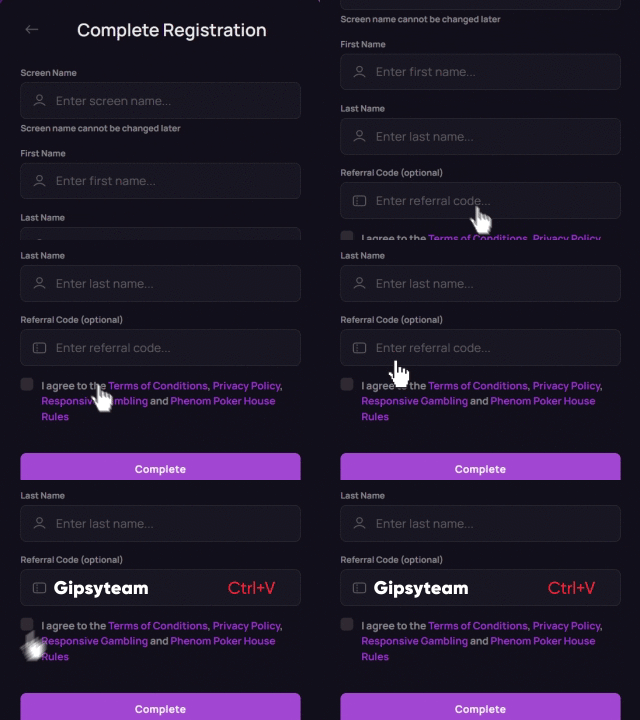
The registration process requires basic personal information, including your legal name, address, date of birth, and the last four digits of your Social Security number. This data is used to verify both identity and eligibility for real money play. Before joining a table, players must confirm that they are physically located within Michigan’s borders. Licensed poker sites employ geolocation software to validate player location in real time, ensuring compliance with state law.

Once verified, deposits can be made securely through PayPal, ACH bank transfers, Play+ cards, or debit and credit options. Withdrawals are processed through the same channels, with licensed operators guaranteeing timely payouts and transparent transaction histories.
Most Michigan poker rooms also integrate bonuses and player reward programs into their platforms, offering deposit matches, leaderboard challenges, and freeroll tournament entries. While these promotions can add extra value, they are fully regulated by the MGCB, meaning terms and wagering requirements must be clearly disclosed. Players can participate via desktop clients or dedicated mobile apps for iOS and Android, all of which feature encrypted connections and responsible gaming tools such as self-exclusion and deposit limits.
In essence, the state’s licensed infrastructure allows MI residents to play online poker in the same secure and professional setting as live casinos. By combining stringent regulation with modern technology, Michigan has created an online ecosystem that supports both recreational play and long-term bankroll growth in a safe, legal, and transparent environment.
Live Poker Rooms in Michigan
Beyond online play, Michigan continues to host a strong network of live poker rooms that attract both casual and competitive players.
The largest hubs include FireKeepers Casino Hotel in Battle Creek, known for its major tournament series and consistent high-stakes action, and MGM Grand Detroit, which offers daily No-Limit Hold’em and Omaha games with reliable traffic.

Smaller rooms at venues like Soaring Eagle Casino and Gun Lake Casino cater to recreational players seeking low buy-ins and community-oriented games.
The steady mix of professional competition and relaxed local games has made Michigan one of the Midwest’s most active poker destinations, balancing modern regulation with the traditional poker-room experience.
Future Outlook for Online Poker in Michigan
The future of playing poker online in Michigan points toward measured but meaningful growth. The state’s participation in MSIGA has already positioned it as a central player in the evolving U.S. poker network, and upcoming regulatory updates could further expand liquidity.
If additional states like Illinois or New York join the agreement, Michigan’s networks would see a substantial boost in game variety and tournament guarantees. From a business standpoint, operators are expected to compete through software innovation rather than sheer expansion.
The next phase of growth will likely involve cross-platform integration between casino, sportsbook, and poker products, improving accessibility for existing players rather than flooding the market with new brands. With consistent tax revenue, active regulation, and sustained player trust, Michigan’s poker ecosystem has matured into a model that other states are expected to follow.
Conclusion
Online poker in Michigan stands as one of the most stable and transparent models in the U.S. gaming landscape. With firm oversight from the Michigan Gaming Control Board (MGCB), a growing roster of licensed operators, and participation in the Multi-State Internet Gaming Agreement (MSIGA), MI players enjoy the rare combination of legal protection, competitive gameplay, and seamless access across devices.
The market’s continued growth is driven by player confidence and technological maturity rather than speculation. Whether logging in for a late-night tournament or playing casually on mobile, residents can trust that every hand dealt, and every dollar won, is backed by regulation and accountability.
As more states follow Michigan’s lead, the Wolverine State’s poker framework serves as a blueprint for how regulated online gaming can thrive responsibly, balancing innovation with integrity.