The tale of PokerStars spans over two decades, and like any good story, it has some of the highest highs and the lowest lows.
You may know about the PokerStars brand in 2026, but unless you’ve been following closely, there’s a lot you’ve missed.
We’ve condensed the history of PokerStars into a quick read. Enjoy.
2001: A Poker Powerhouse is Born
In a very strange coincidence, PokerStars was launched in beta on the very same day as the 9/11 terrorist attacks (September 11, 2001).
First, it ran free-to-play tournaments, but Isai Scheinberg was on a mission. Using his PYR Software (founded in 2000), he planned to overtake PartyPoker and Paradise Poker to become the go-to site for multi-table tournaments.
Months later, real money tournaments hit the lobby. Everything from Hold’em and Omaha to Limit Stud and PLO8 was there, with prize pools up to $350 in a Limit Hold’em tournament of all places.
The website introduced the brand as “the PokerStars Internet Poker Room.”
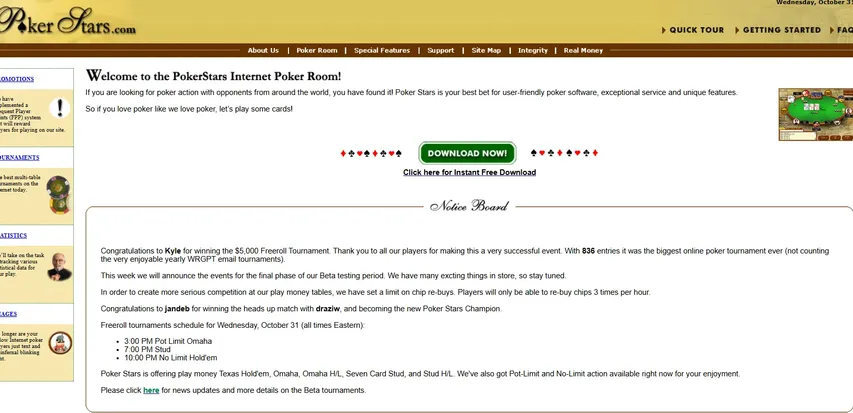
At the end of October, they proclaimed that 836 entries in a $5,000 freeroll had been one of the biggest poker tournaments ever. What a time to be alive.
Frequent Player Points became the early rakeback model on Stars, “to show its appreciation” for its players. For $1, you got 1 FPP. This could buy you into weekly and monthly FPP tournaments with up to $1,000 GTD.
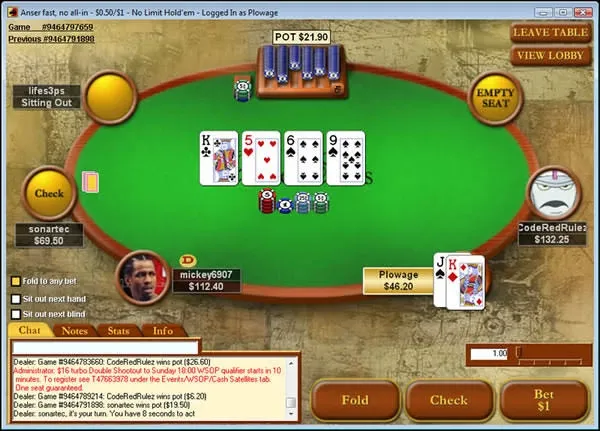
In December that year, the first real money tables went live. Isai Scheinberg’s beta testing was finished, and one of the most successful online poker sites was slowly taking shape.
2002: The First WCOOP
Only a few months had passed since the freeroll beta tournaments, but Stars was already hosting $50,000 guarantees, even for Limit Hold’em. $215 buy-in, $10,000 minimum as a first-place prize.
2002 is so long ago that we need to use an inflation calculator on that kind of prize pool. For your information, $50,000 in 2002 is about $92,000 in today’s money. Not bad for an online Limit tournament.
PokerStars quickly overshadowed this with the World Championship of Online Poker (WCOOP). $200,000 guaranteed, 10 tournaments, full satellite support, and an eventual prize pool over $630,000.
It’s a modest schedule with a range of formats, something that hasn’t changed to this day.
| Date | Event | Buy-In | Guaranteed |
|---|---|---|---|
| Monday, July 20 | Limit Hold'em | $100+$9 | $25,000 |
| Tuesday, July 21 | Pot Limit Omaha Hi/Lo | $250+$15 | |
| Wednesday, July 22 | 7 Card Stud Hi/Lo | $250+$15 | |
| Thursday, July 23 | No Limit Hold'em | $300+$20 | $25,000 |
| Friday, July 24 | Heads-Up Match Play Stage II | N/A | |
| Saturday, July 25 | Pot Limit Hold'em | $300+$20 | |
| Sunday, July 26 | Limit Omaha Hi/Lo | $500+$30 | |
| Monday, July 27 | Heads-Up Match Play Stage III | N/A | |
| Monday, July 27 | Limit Hold'em | $500+$30 | $50,000 |
| Tuesday, July 28 | No Limit Hold'em | $1,000+$50 | $100,000 |
The $100,000 GTD Main Event got 238 players, creating a massive overlay of about $150,000 on top. MultiMarine won $65,450 and earned a spot in poker history.
Even if Isai and PokerStars knew it, the players probably had no idea how huge WCOOP would become. Besides GGMillion$, it's still known by tournament players the world over.
Along with WCOOP this year, Stars also hosted tournaments where winners got a WSOP Main Event ticket. Back then, the Main Event winner got $2,000,000. It almost seems sad compared to today’s $10,000,000. Phil Hellmuth said he would shave his head if Robert Varkonyi won, and Robert did win. A man of his word, Hellmuth’s head was shaved.
One of PokerStars’ regulars, Julian Gardner, didn’t win a ticket on the site, but entered a $220 Main Event satellite in Vegas anyway. He came in second place, and won $1,100,000 at age 23.


2003 to 2005: PokerStars Becomes #1 in Player Traffic
An accountant from Tennessee named Chris Moneymaker wins the 2003 WSOP Main Event. He’s the first person to win from an online satellite, and that satellite cost $86 on PokerStars. It was his first live tournament.
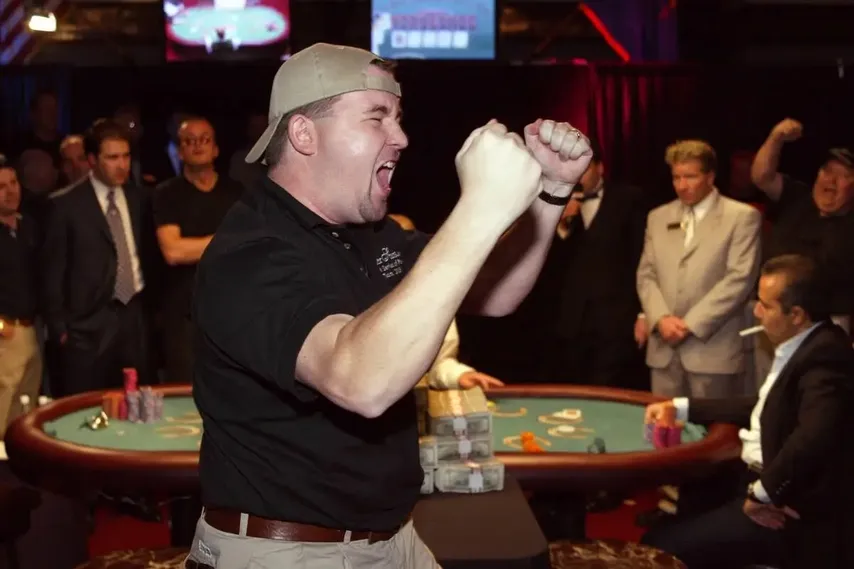
The message this sends to the world is crystal clear: Even an average Joe can win millions of dollars from online poker, and PokerStars is the place that happens. The growth this afforded Stars can not be understated. They even activated a Moneymaker Deposit Bonus soon after the win.
Then it happened again. Greg "Fossilman" Raymer qualified for the 2004 Main Event on PokerStars, and won it for $5,000,000 wearing his holographic glasses.
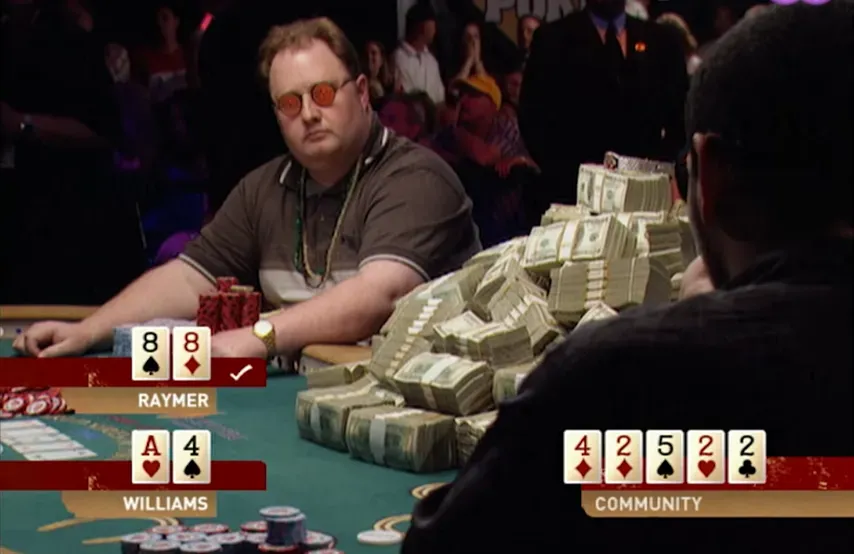
He was one of 315 others that PokerStars sent to the Main Event. 28 finished in the money, meaning almost $11 million of the $24 million prize pool went to PokerStars’ players.
If anyone was unsure, 2004 reminded everyone that PokerStars was a stepping stone to poker riches and glory. The brand launched the EPT and the PokerStars Caribbean Adventure in the same year. The PCA brought us one of the most legendary old-school-era bluffs ever.
And in 2005, PokerStars became the world’s largest online poker site. In the same year, WCOOP hit $12.8 million in prize money, becoming the third biggest series in the world (live or online).
The PokerStars brand was synonymous with tournament poker, trusted, overflowing with players, and would hit 100,000 players in 2006, though a huge obstacle was looming.
2006: The Unlawful Internet Gambling Enforcement Act
This will be one of the most interesting and risky years in the history of PokerStars.
In October of 2006, the Unlawful Internet Gambling Enforcement Act (UIGEC) was signed. United States banks could no longer process online gambling payments.
PartyPoker and 888poker immediately exited the market, and PartyPoker paid a $300 million non-prosecution settlement later on.
Even though things were looking dark for online poker, Stars stuck around, along with Full Tilt. Apparently, they both decided that UIGEA did not apply to online poker.
Regarding this move, Isai Scheinberg said, “We reconfirmed our position, which was further confirmed by federal courts as well, that poker is a game of skill and UIGEA doesn’t apply.”
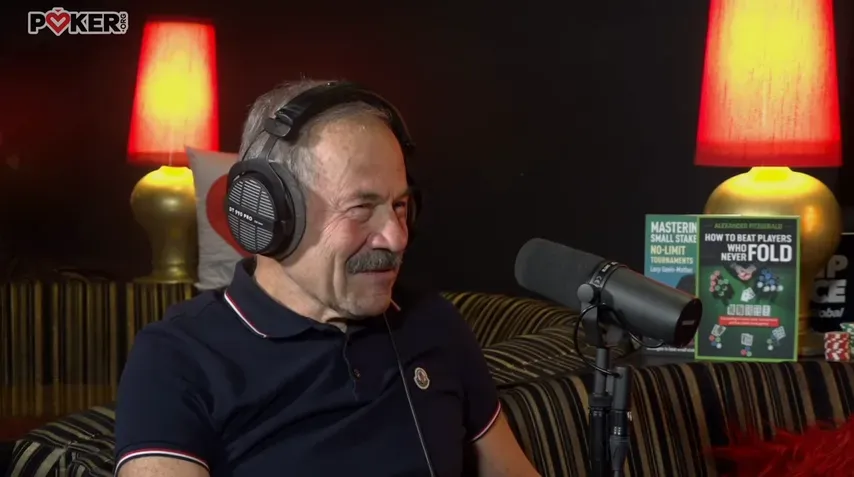
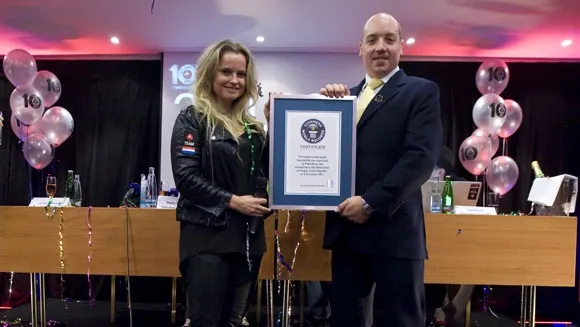
This decision would later cost both sites dearly, but in the meantime, PokerStars absolutely dominated by filling the sudden void. 100,000 active players were recorded in February, earning them a spot in the Guinness Book of World Records.
2011: Black Friday Strikes Stars Down
Riding the sky-high waves of success after 2006, PokerStars signed Daniel Negreanu, and launched the Spring Championship of Online Poker to pair with WCOOP (which grew to 45 events). The brand also added to its live schedule, introducing the North American Poker Tour (NAPT) and the Latin American Poker Tour (LAPT).
Stars broke a new record with 300,000 active players across over 42,000 tables in 2011, but a decision from 2006 was about to come back and bite them.
On April 15th of 2011, the bet Stars had made on UIGEA went wrong. The Department of Justice seized PokerStars, Full Tilt, and Absolute Poker domains, then indicted Scheinberg. Bank fraud, money laundering, and illegal gambling were among the charges for these poker brands.
Five days later, the domains were returned, but only to facilitate withdrawals. Their online poker offerings were cut off.
PokerStars famously and heroically repaid players fully. Full Tilt, however, didn’t have the same segregated funds that Stars had maintained. Money from Full Tilt players had funded executives and sponsored players, and around $390 million was owed around the globe.
In 2012, PokerStars settled with the DOJ for $731 million, which included $184 million to make Full Tilt players whole (a process that was wrapped up by 2013). A deal was struck where Stars acquired Full Tilt, and never had to admit wrongdoing in the civil case. Isai Scheinberg spoke about this moment in a recent interview.
“We exited and immediately talked to the lawyer and said we wanted to pay the money back. We had the money. The lawyer said, "No, no, no, it will take a year," and I said, "No year. Now." We paid it within a week or two. The DOJ was under pressure too—from tournament players and other players—so they liked the fact that we wanted and were able to pay the money back. They gave authorization to processors to do it, and we just paid.”
You might not have been there, but this was a legendary moment. It may go down in history as the most righteous act ever made by a poker brand. Even though he is a bona fide hero, Isai Scheinberg is quite humble and pragmatic about his role.
“Thank you for thanking me, but it was kind of in our spirit of doing things. Customers and employees—those are the two most important things. Money comes after that, not before.”

2014: PokerStars Sells in Package Deal for $4.9 Billion
PokerStars reached 100 billion hands dealt in 2013, and was bought by the Amaya Gaming Group in June of 2014 for $4.9 billion. The deal included PokerStars, Full Tilt, and the Rational Group, which originally introduced Stars to the world and also owned all of the live series like the EPT and PCA.
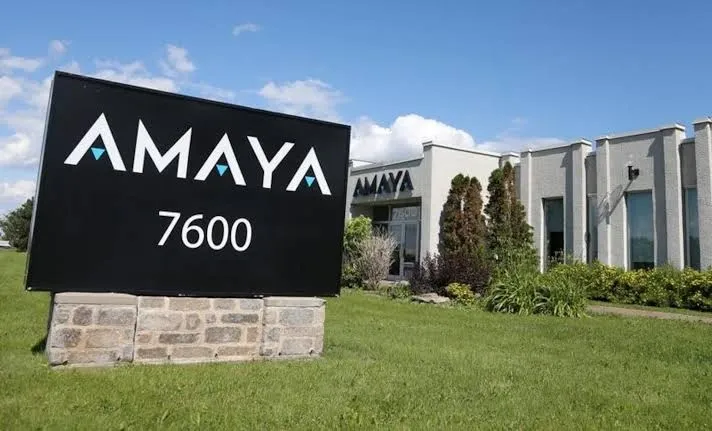
This ended the Scheinberg family relationship with PokerStars. The CEO at the time, Mark Scheinberg, said in a press release that he was “confident” in Amaya’s ability to “continue to successfully grow the business into the future.”
The Amaya Gaming Group pledged to stay customer-focused, but the player base was doubtful. By next year, their worries were confirmed.
It was only the first of several changes, but in 2014, Amaya Gaming Group added casino games to PokerStars, something that Isai Scheinberg was always firmly against. The brand had confirmed a poker-only stance in the past, and Amaya changed that in months.
“We never offered anything other than poker,” Isai Scheinberg said in 2025.” We had a lot of people coming to us who wanted us to open, you know, casino games. I never wanted to do it.”
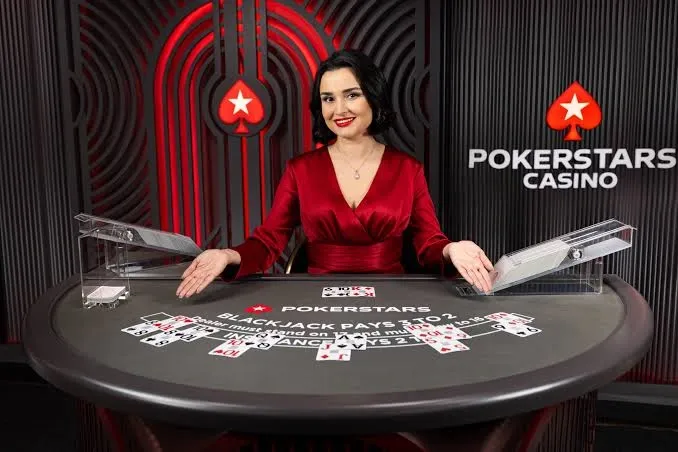
Daniel Negreanu, the room’s ambassador at the time, rationalized the decision.
"I am not a believer in restrictions, regulations, and stuff. If people want to play craps online for money, if that’s what they choose to do, I am OK with that."
2015 to 2016: Rakeback Changes & Player Strikes
Supernova Elite was the highest tier of rakeback possible on PokerStars. This was a truly special program that would never return in the current era. Players could use their Frequent Player Points to buy insane things inside the VIP Store:
- Literally name a star in the sky, using your rakeback on PokerStars
- PlayStations, televisions, cameras, camcorders, iPods, DVD players, and more
- Heads-up tournament with Greg Raymer, Chris Moneymaker, Joe Hachem, or Tom McEvoy
- Porsche Cayman S, an item that Charlie Carrel says he had his eyes on
- Concierge Service, able to get you anything worth up to $3,000, within reason
- Tickets to sporting events
- A cookie basket featuring “3 dozen assorted large delicious gourmet cookies”
- Cold hard cash and gift certificates
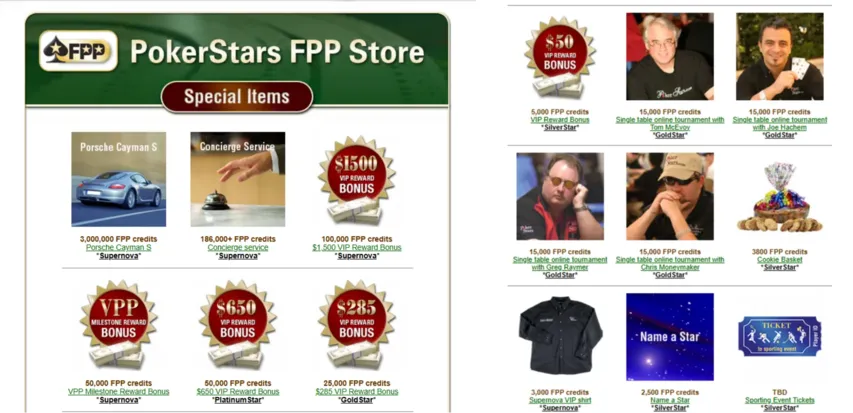
In November 2015, the Amaya Group revealed they were about to abolish this reward system, moving everyone to around 28% rakeback at maximum. High rollers and grinders were enraged at the sudden changes, as they were on track for up to 75% rakeback before the Supernova Elite was axed.
Justin Bonomo tweeted “There will be riots,” and he was not wrong.
After the program was removed January 1st, 2016, around 2,500 players began a strike, organized mostly by Dani “Ansky” Stern, who called November 1st “the day PokerStars formally announced they no longer care about their customers.”
Stars claimed they were refocusing rewards on amateurs, which didn’t soothe grinders and high-rollers much. The brand made a statement:
“Approximately two percent of players – including our highest volume and high stakes players – will have significantly reduced rewards. The reason we are focused on the highest status levels is that these rewards have become so enticing that we have inadvertently altered why some people play and how they play. We are introducing these changes to move towards a more balanced long-term poker economy and to return the game back to one that rewards skill via winning at the tables rather than playing primarily for volume.”
Have to give Stars credit for saying “significantly reduced rewards,” but honesty wouldn’t save them from the regs’ wrath. At the same time, PokerStars announced plans to heavily restrict heads-up displays (HUDs), further souring their reputation.
The effects of the strike were felt quickly. MTTs didn’t hit their guarantees, high-stakes traffic dropped, and 888poker hopped in to grab the liquidity.
No more Porsches. Just PokerStars keyrings, water bottles, and far less rakeback. Lucrative to lackluster in just over a year.

2017 to 2020: Company Consolidation & Decline Begins
The back half of PokerStars' history is a story of a brand passing through three owners while slowly ceding its throne
In 2017, the Amaya group was hit hard with the Baazov insider-trading scandal. Apparently, David Baazov, the CEO of Amaya in 2016, had used his insider knowledge to trade shares before the announcement and turn a profit.

Amaya rebranded itself as The Stars Group in 2017, partly to shed the association with this scandal. Charges were dropped anyway, but the whole thing was probably very inconsequential to players either way. Insider trading isn’t a turn-off for poker players.
But that same year, PokerStars fumbled its live tournament series, renaming the beloved tours into awkward new "PokerStars Championship" and "PokerStars Festival" banners.
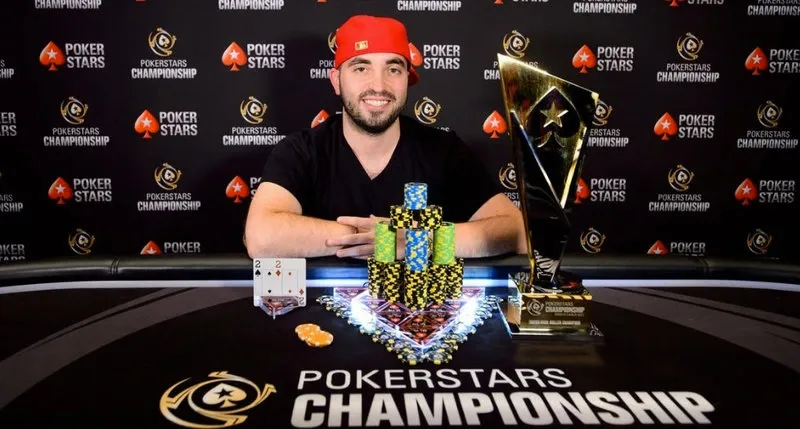
The experiment landed so flatly that by 2018 the company reversed course and revived the European Poker Tour and PCA names outright.
2019 was a big year. The inaugural PokerStars Players Championship (PSPC) in the Bahamas was a genuine triumph. Spain's Ramon Colillas turned a free rakeback promo into a $5.1M win. It wasn’t quite as strong as the Moneymaker era successes, but it was great for PR.
But 2019 also saw Daniel Negreanu exit after 12 years, straight to their rival GGPoker. In 2020, Chris Moneymaker also departed.
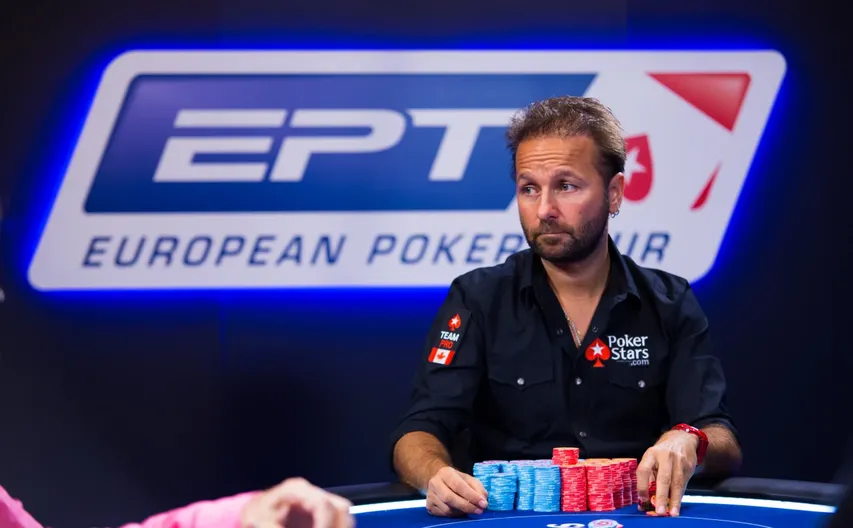
Flutter Entertainment would also absorb The Stars Group the same year. That merger completed on May 5, 2020, folding PokerStars into a gambling giant alongside FanDuel, Sky Bet, Paddy Power, and Betfair.
2021 to 2023: GGPoker Overtakes PokerStars
In June 2021 GGPoker overtook PokerStars as the world's largest online poker room, and that has not changed yet. In 2026, GGPoker is more than a giant; they are the equivalent of a Range Rover compared to ants (and that goes for almost every room, not just PokerStars).
2021 ended a reign of roughly fifteen years at the top for Stars. It’s an incredible achievement, but the fall from grace seems avoidable. While other platforms innovated and attracted players, Stars remained attached to the status quo.
While their crown was stolen, the brand marked a 20th anniversary, though it was bittersweet. The Scheinberg era was behind them, and so was their market share dominance.
The next two years were about clawing back relevance in the US. Brand deals with Oracle Red Bull Racing and the Detroit Red Wings came in 2022.

Later in 2023, PokerStars became the first operator to merge Michigan and New Jersey player pools. They were briefly the largest US online network.
Concurrent cash game players in 2022 sat around 4,000, an unfathomable difference to their heyday.
2024 to 2026: Still a Leader, But No Longer a Titan
In January 2024, PokerStars revamped its loyalty program with new Select and Select Plus tiers. These were the most generous rewards since the Supernova Elite days, though not comparable at all.

Months later, in April 2024, it pushed through its first major rake increase in eight years. Boycott chatter piped up again and the familiar grinder backlash ensued.
The global player pool kept shrinking, and ownership was forced to dial back prize pools. SCOOP fell from $75M in 2024 to $60M in 2025. In 2026, the prize pool was $52,735,227.
Here’s what regulars think: PokerStars essentially forgot what made them into industry leaders. All of the things that attracted players in the past (fantastic rakeback potential, major guarantees, a focus on customers), aren’t what they were.
Lex Veldhuis leaving wasn't a great look either, but overall not indicative of game quality.
After 17 years I have left Pokerstars.
— Lex Veldhuis (@LexVeldhuis) January 3, 2026
I'm excited about the future and 2026 is going to be a big year!
New chapter begins on stream today. <3

The owners began merging player pools, putting Betfair, Paddy Poker, and Sky together in hopes of bumping up traffic numbers.
PokerStars is still one of the leaders, and that’s undeniable. Security is still one of their best attributes, something which is more and more valuable to players every year.
Traffic is not what it was in the glory days, but Stars still competes with the best. They are one of the highest traffic poker sites for micro-stakes formats like 4-Card PLO and 6-Card PLO, plus Hold’em.
That’s the main takeaway from this article. PokerStars might not have the same numbers they had in 2011, but they still have value and are still one of the best options. It’s easy to point out their highs and look down on what they’ve become, but if they are still a top option, does history from 2011 matter?