The question is poker harder than chess misses the point: both games test different dimensions of skill, and neither reduces to a single difficulty metric. Poker and chess both require players to evaluate alternatives, anticipate responses, and maintain focus at all times. The connection between the two lies in these decision-making processes: building a plan, recognizing opportunities, and changing direction when the opponent presents a new problem.
Strategy in poker and chess depends on connecting actions. Advancing a pawn can prepare an attack several moves later. Betting on the flop requires considering which cards may appear on the turn and how to continue against different reactions. Planning means understanding these consequences, without treating the plan as an obligation.
| Skill | On the board | At the poker table |
|---|---|---|
| Pattern recognition | Identifying forks, pins, and weaknesses | Recognizing flop textures and betting patterns |
| Calculation | Calculating move sequences | Evaluating odds, ranges, and EV |
| Error exploitation | Taking advantage of an unprotected piece | Adjusting bets against opponents who call or fold too much |
| Emotional control | Reorganizing the game after a mistake | Avoiding tilt after losing a pot |
Study also brings the two disciplines closer. Reviewing games and hand histories helps uncover recurring mistakes. It's worth reconstructing your reasoning before consulting an analysis program: the goal is to understand why a decision works.
Observing opponents completes this work. Identifying their tendencies allows you to adapt choices, but isolated impressions require confirmation. One bad play doesn't define someone's entire repertoire.
Skills That Transfer Between Poker and Chess
The table above shows how fundamental abilities translate across both games. Pattern recognition, calculation, exploiting errors, and emotional control remain relevant whether you're evaluating a middlegame position or deciding how to continue on the turn. These transferable skills explain why players in one discipline often find elements of the other familiar, even if the strategic frameworks differ.
Poker vs Chess: Information, Probability, and Variance
The differences between poker and chess begin with access to information. Understanding poker vs chess complexity requires recognizing that complete information and hidden information create different cognitive challenges. On the board, all pieces and moves made are visible. Opening theory can guide early moves in chess, but it does not reveal an opponent's middlegame plans or make it possible to calculate every variation. Unlike poker, chess has no hidden cards or random card draw.
In poker, part of the information remains hidden. Instead of trying to guess a specific hand, the player works with a range: the set of hands the opponent can have. Each bet, position, and community card helps update this estimate.
There is also variance, especially noticeable in the short term. Discounting ties, a hand with a 70% chance of winning will still lose approximately 30% of the time under the same conditions. Losing the pot does not demonstrate, by itself, that the decision was bad. Expected value (EV) considers possible outcomes and their probabilities, not just the observed result.
For example, if the pot contains $100 and the opponent bets $50 on the river, calling the $50 requires winning more than 25% of the time to have positive EV, ignoring rake and ties. In chess, calculation involves possible move sequences; in poker, you also need to estimate which hands the opponent can have and how often each outcome occurs.
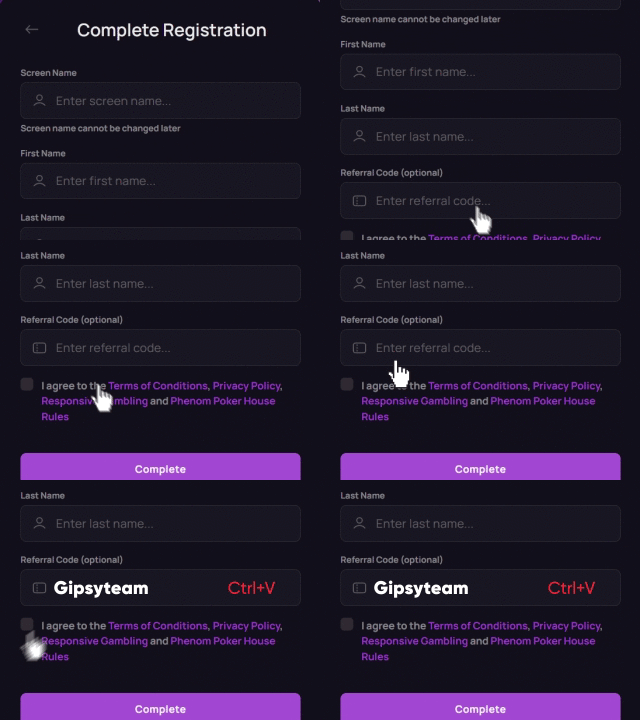
Those who want to put these skills into practice without risking money can start with freerolls, free tournaments with real prizes.
- CoinPoker offers no-buy-in freerolls with real-money prizes throughout the day.
- BCPoker runs two exclusive $100 freerolls per week for GipsyTeam players, plus monthly $250 events.
- At RedStar Poker, our players also have access to an exclusive €50 freeroll every Friday. Check the freeroll schedule and choose where to start.








This distinction changes emotional control. In chess, a loss invites the search for evaluation or calculation errors. In poker, it's necessary to separate technical mistakes from natural swings, without using luck as an automatic excuse.
Therefore, the poker vs chess comparison should not turn rating into an equivalent of profit. Chess rating estimates relative strength; financial results also depend on volume, opponents, costs, and format. A winning streak does not prove superiority, just as a losing phase does not close the evaluation of a player.
Chess Players in Poker
To understand why chess players play poker, it's worth observing the attraction to another competitive environment, in which calculation, study, and adaptation remain important. So, are chess players good at poker? The answer depends on their willingness to study ranges, variance, and opponent tendencies—skills that aren't automatic transfers. The opportunity to apply these skills helps explain the connection, although each trajectory has its own motivations.
Mike "Timex" McDonald is an example of movement in both directions. He played chess as a teenager, focused his career on poker, and later returned to the board. In an interview with GipsyTeam, he said he became interested in the game again while following the 2018 World Championship. In 2026, he won the Cayman Islands championship and represented the territory at the Chess Olympiad.

The account also shows the limits of this transfer. Timex acknowledged difficulties in positional play and described a game in which calculating variations did not compensate for his strategic decisions. Having competitive experience does not eliminate technical gaps.
Jennifer Shahade, two-time U.S. Women's Chess Champion, also built a career in poker. Jeff Sarwer, who gained prominence as a chess prodigy in childhood, also began competing in card tournaments.
These examples make poker for chess players a concrete possibility, without promising automatic success. Knowledge about ranges, probabilities, bankroll management, and betting dynamics must be learned. In the reverse direction, chess players coming from poker also need to study openings, endgames, and position evaluation: familiarity with difficult decisions does not replace specific repertoire.

Magnus Carlsen is one of the greatest names in chess history. The Norwegian became a grandmaster at 13 and won the classical world title in 2013. After four successful defenses, he decided not to compete in the 2023 championship. In 2014, he reached 2,882 points in the FIDE ranking, the highest rating ever recorded in classical chess.
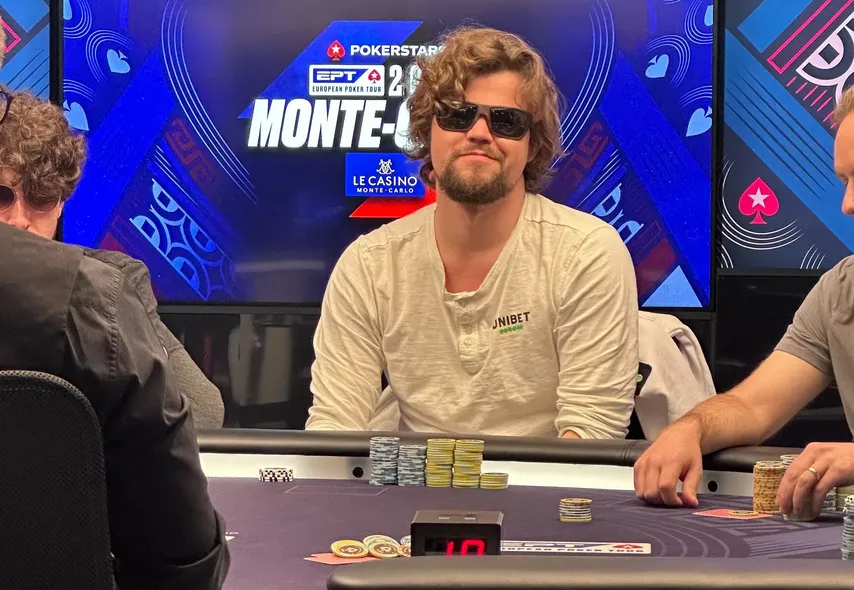
In recent years, he has taken his competitiveness to poker tables. In 2022, the Norwegian finished in 25th place out of 1,050 entries in the Main Event of the Norwegian Championship, held in Dublin, receiving €5,160. The following year, he reached 63rd position in the EPT Monte Carlo Main Event, with a prize of €15,000. He also participated in cash games broadcast by Hustler Casino Live and the World Series of Poker. Carlsen's game was praised repeatedly in broadcasts, but in an interview with the PokerStars blog, he admitted that the time limit for acting in poker caused him stress and that in chess, he usually knows better what to do.
The relationship between the two games also reached training platforms. In 2026, the Chess.com team launched Gambit, a free environment to learn poker, play against bots and other users, review hands, and track progress through a rating system. With professional chess becoming more poker-adjacent through training tools like Gambit and high-profile crossovers, the boundary between the two communities continues to blur. The platform uses resources similar to those of Chess.com, but without real money betting.
Where to Play Online: Rooms, Apps, and Bonuses at GipsyTeam
Those who want to try cards can start with GipsyTeam's poker room reviews. They help compare formats, limits, traffic, and registration conditions. There are options focused on cash games, where chips represent money, and tournaments, with buy-ins and prizes according to placement.


- GipsyTeam's unique promotions
- Help with deposits and cashouts
- Access to private freerolls
- Round-the-clock support
- Уникальные акции от GipsyTeam
- Помощь с депозитами и кешаутами
- Доступ в закрытые фрироллы
- Круглосуточная поддержка
There is also a section for mobile apps and clubs. This alternative allows you to research conditions for playing on your phone, but it's important to distinguish a room with its own lobby from an app that brings together clubs with specific rules and administration.
Before choosing, compare these points:
- Format and routine: tournament duration, peak traffic hours, and table availability at your desired limit.
- Mobile experience: compatibility, button clarity, and ease of following the action.
- Costs and rewards: rake, the fee charged for play, and rakeback, the return of part of that charge.
- Promotional conditions: registration requirements, deposit, bonus release, and participation in exclusive tournaments.
On GipsyTeam's promotions page, you'll find deposit bonuses, rakeback offers, and freerolls, tournaments with no entry fee. Some benefits are exclusive to those who register through the indicated links.
GipsyTeam support can clarify these conditions before registration and any other questions about poker. We operate 24 hours a day, seven days a week.